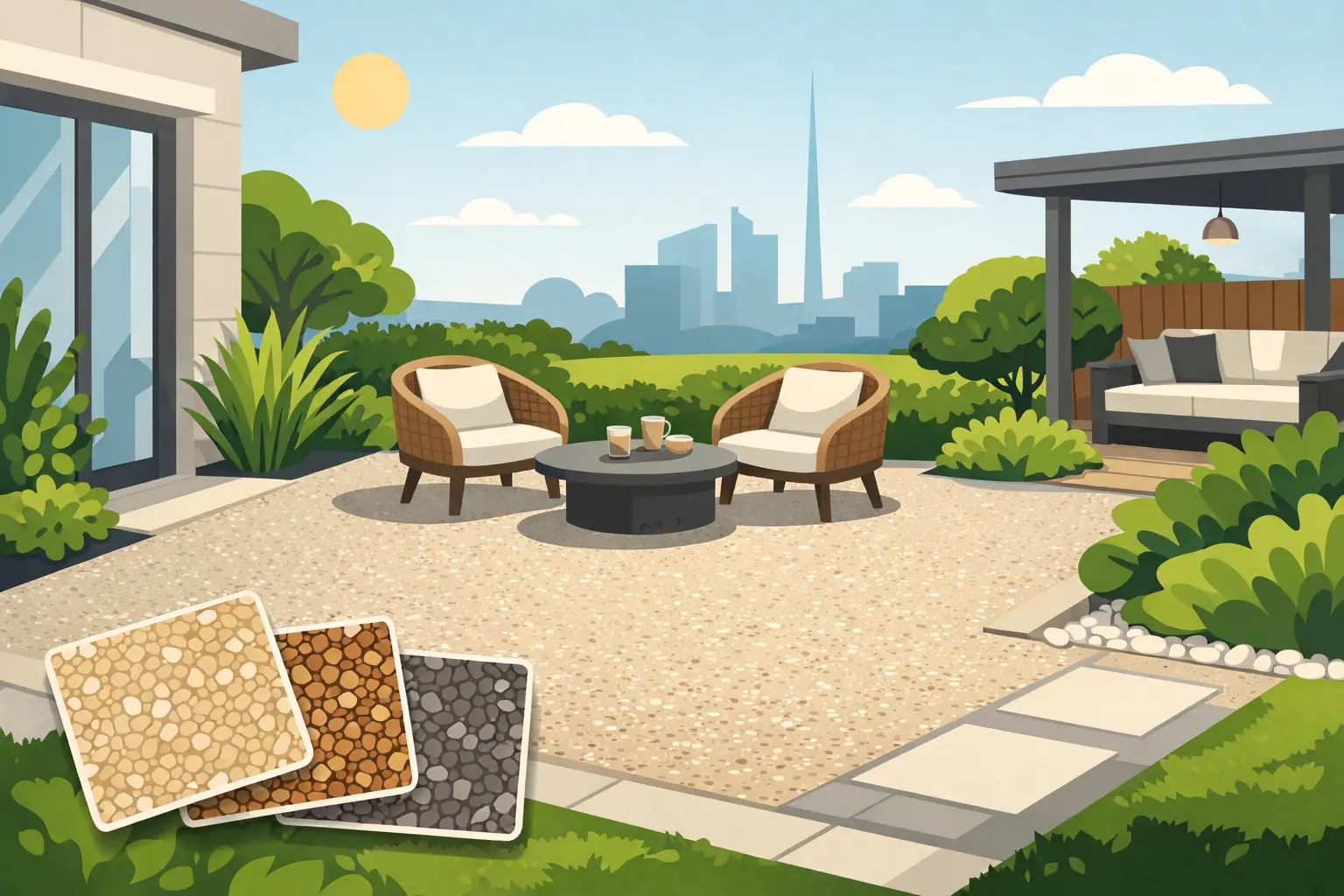
A patio has to cope with more than a few summer evenings in Dublin. It needs to handle regular rain, muddy shoes, garden furniture, children at play and the day-to-day movement between house and garden. A resin bound patio Dublin homeowners choose can provide a clean, attractive finish while helping water drain through the surface rather than sit on top of it.
Resin bound surfacing combines natural aggregate with a clear UV-stable resin. The coated stones are mixed on site and hand-trowelled onto a properly prepared base, creating a smooth, even and permeable surface. It is a practical alternative to paving slabs, loose gravel and some traditional concrete finishes, but the quality of the groundwork matters just as much as the finished colour.
Why choose a resin bound patio in Dublin?
The main appeal is the balance between appearance and performance. Unlike loose gravel, resin bound aggregate stays in place underfoot and does not migrate into lawns, doorways or flowerbeds. Unlike many paved patios, there are no individual joints where weeds can take hold or where slabs can begin to move over time.
For Dublin and Wicklow properties, drainage is a major consideration. Rainwater can pass through a permeable resin bound surface and into the suitable sub-base beneath it. This reduces standing water and helps the patio remain usable after wet weather. Where a project is designed with the right permeable base and drainage details, it can support SUDS-compliant drainage principles.
The finish also suits a wide range of homes. A lighter aggregate can brighten a shaded rear garden, while warmer gold, grey and red blends can complement brickwork, stone walls or timber fencing. With more than 40 colour options available, the patio can be designed to sit naturally beside an existing driveway, pathway or garden feature rather than looking like an afterthought.
Resin Bound Patio Dublin: What makes a good installation?
A resin bound patio is not simply a layer applied over any existing surface. Long-term performance begins below ground level. If the base is uneven, unstable or holding water, even premium materials will not compensate for it.
Start with the existing ground and drainage
The site should be assessed before work starts. This includes checking access, levels, existing drainage, the condition of any old patio and where water currently runs during heavy rain. Some patios can be laid over a sound, suitable base, but worn paving, cracked concrete, weak tarmac or areas with poor falls may need to be removed and rebuilt.
Excavation creates the depth required for a stable construction. A properly specified sub-base is then installed, compacted and shaped to suit the site. For a fully permeable system, the layers below the resin need to allow water to move through them rather than trapping it. This is why drainage and groundwork should be managed as part of one project, not treated as an extra once the surface is complete.
Use the correct resin and aggregate blend
Resin bound and resin bonded are often confused, but they are different systems. Resin bound surfacing mixes aggregate and resin together before it is trowelled into place. The finished surface is smooth, porous and comfortable underfoot. Resin bonded surfacing applies resin to a base and scatters loose stone across it, producing a rougher texture with some aggregate remaining exposed.
For patios, resin bound is normally the preferred option because it provides a more refined finish and is easier to sweep, clean and live with. Premium UV-stable resin is particularly important for exposed gardens, as it is designed to help the surface retain its appearance rather than yellowing noticeably over time.
Aggregate quality matters too. The stone needs to be clean, dry and correctly graded so the resin coats it evenly and the finished patio has consistent texture and strength. A sample board can be useful when choosing colours, especially where the patio will meet existing natural stone, brick or timber.
Finish details that protect the result
Edges, thresholds and levels deserve careful attention. The new patio should meet doors, lawn edges, steps and drainage channels neatly, without creating trip hazards or directing water towards the property. A well-finished edge does more than look tidy – it helps contain the surface and gives the whole area a stronger, more deliberate appearance.
Experienced installers also plan how the patio will be accessed during the works. Mixing and laying resin bound material is time-sensitive, so site preparation, materials and labour need to be organised before the installation day. This is one reason a full-service contractor can make the process more straightforward for homeowners.
How does resin bound compare with other patio surfaces?
There is no single best patio material for every garden. The right choice depends on the condition of the site, the style of the property, the desired finish and how the area will be used.
Paving slabs offer a traditional appearance and can work well for period homes or gardens where a natural stone look is essential. However, they have joints to maintain, can become uneven if the base moves, and may require regular attention to weeds and staining. Quality paving is also labour-intensive, particularly where cuts and patterns are involved.
Loose gravel is usually lower in initial cost and naturally free-draining, but it can be inconvenient around patio furniture, pushchairs and dining areas. Stones travel easily, and raking is often needed to keep the surface looking orderly.
Concrete can be durable, but it is generally less permeable unless drainage is designed around it. It may also crack over time if the ground settles. Tarmacadam is practical for larger utility areas, though many homeowners prefer the softer, more decorative appearance of resin bound aggregate close to the house.
Resin bound surfacing costs more than a basic gravel area, and it is not a shortcut over poor foundations. In return, it offers a low-maintenance, joint-free and visually consistent patio that can be tailored to the property. For many homes, that is a worthwhile long-term trade-off.
Maintenance for a clean, long-lasting patio
One of the advantages of resin bound surfacing is that it does not need sealing, sanding or routine joint repairs. Regular sweeping removes leaves, soil and garden debris before they build up. A gentle wash with clean water can freshen the surface, while a suitable cleaner may be used for occasional marks or organic growth.
Avoid harsh solvents, aggressive pressure washing at close range and metal shovels that could damage the resin. Keep drainage routes clear, especially in autumn when leaves can gather around gullies and patio edges. If moss or algae develops in a shaded area, it should be treated promptly with a product suitable for resin bound surfaces.
Durability also depends on using the patio as intended. Garden tables, chairs and barbecues are no problem, but concentrated loads, sharp metal feet and dragging heavy objects across the surface should be avoided. If a patio will be used for a hot tub, outdoor kitchen or particularly heavy feature, mention this at the planning stage so the base can be designed accordingly.
Planning your patio project with confidence
Before choosing a colour, think about how the space needs to work. A compact townhouse garden may benefit from a bright blend and a simple path connection, while a larger family garden might need separate seating, play and access areas. Consider the route from the back door, storage access, garden levels and whether the patio should connect to a driveway or side passage.
A clear, itemised quotation should set out the preparation work as well as the final surfacing. Ask what will happen to existing materials, how drainage will be handled, what depth of base is proposed and whether edging is included. These are the details that affect both price and performance.
Resin Bound Dublin manages patio projects from initial consultation and excavation through to drainage, groundwork and final installation. With more than 20 years of hands-on experience, premium supplier materials and manufacturer guarantees of up to 20 years where applicable, the focus is on a finish that looks right on day one and remains dependable in the years ahead.
The best patio is one designed around the ground, the drainage and the way your household uses the garden. Start with a proper site assessment, choose a finish that suits your home, and give the base work the same attention as the surface you see every day.
Leave a Reply