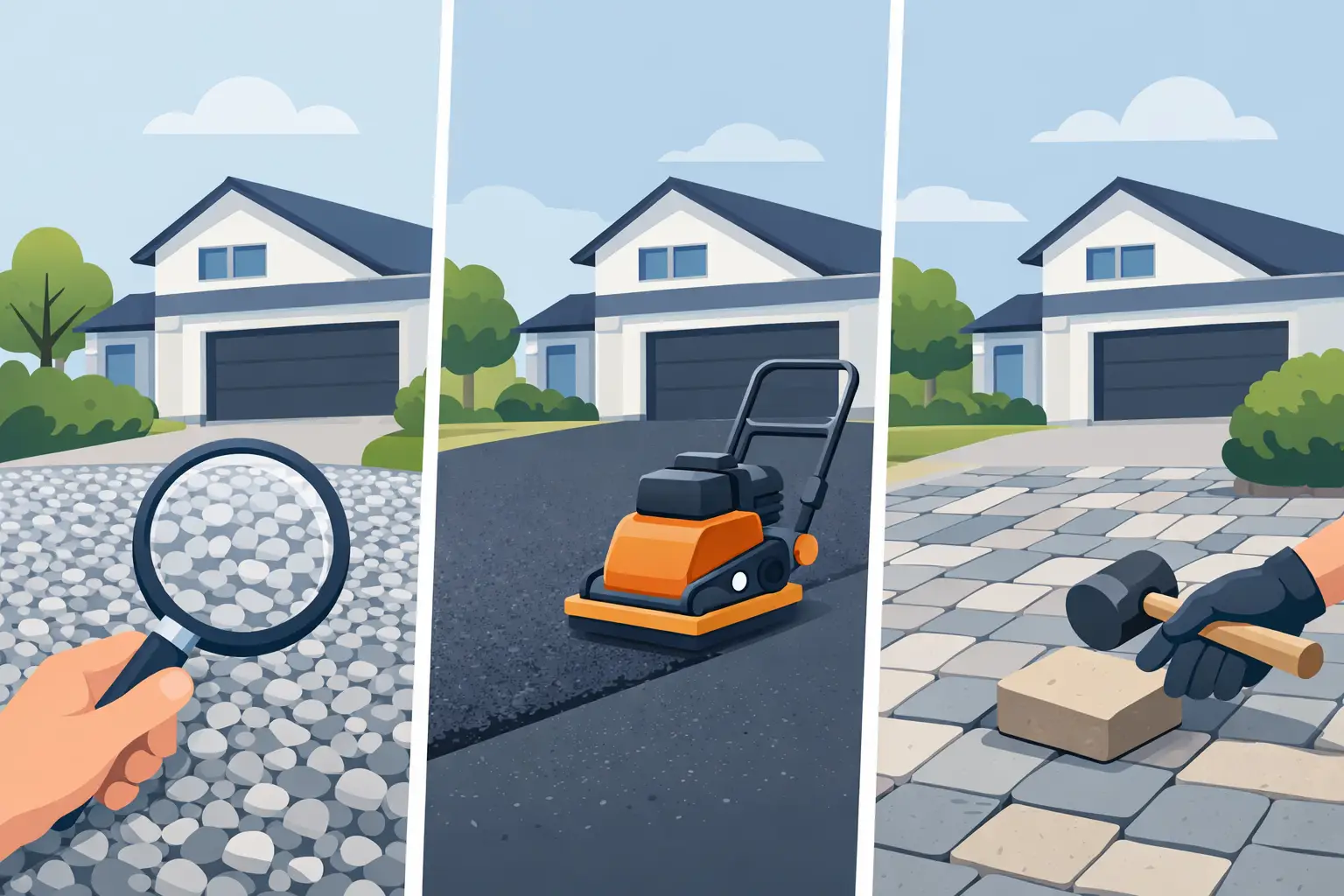
A driveway has to handle far more than parked cars. It carries daily traffic, heavy bins, changing weather, surface water and the first impression of your home. Knowing how to choose driveway surfacing means looking beyond the finish you like in a brochure and considering what sits underneath it, how water will drain and how the surface will perform over many years.
For homeowners in Dublin and Wicklow, the best choice is rarely the cheapest material at the outset. A well-planned driveway should suit the property, manage Irish rainfall properly and be installed on sound groundworks. Get those decisions right and the finished surface will look better, stay safer and require less attention.
Start with the condition of the existing driveway
Before choosing resin bound, tarmacadam or gravel, assess the base already in place. A sound, stable driveway may be suitable for resurfacing, while cracked concrete, sinking sections or persistent puddles usually point to deeper groundwork issues. Covering a failing base can make a new driveway look finished for a short time, but the movement beneath will often show through later.
The key questions are practical. Is the driveway level, or does water run towards the house? Are there soft areas where vehicles have caused ruts? Does the entrance need to carry delivery vehicles as well as family cars? Is there enough depth for a new build-up without creating a high step at gates, paths or the front door?
A proper site assessment should establish whether excavation is needed, what sub-base is required and how drainage will be managed. This is where an experienced contractor adds real value: the visible surfacing is only one part of the job.
Choose driveway surfacing around drainage first
Surface water is one of the most important factors in driveway design. Dublin and Wicklow homes need a solution that can cope with regular rainfall without leaving standing water, slippery areas or runoff towards neighbouring property and public drains.
Permeable surfacing allows water to pass through the surface and drain into a suitable permeable base beneath. Resin bound driveways are a strong option where permeability, a smooth finish and a premium appearance are priorities. The resin binds natural aggregate together while leaving small voids for water to filter through, provided it is installed on the correct porous foundation.
This can support SUDS-compliant driveway design, helping to manage rainwater at source rather than sending it straight into drainage systems. However, permeability is not automatic. Resin bound installed over an unsuitable impermeable base will not deliver the same drainage performance. The base, falls and edge details all need to be planned together.
Tarmacadam is a durable, practical choice for many driveways, particularly larger areas or locations with regular vehicle use. Standard tarmacadam is generally not permeable, so drainage channels, gullies or carefully designed falls may be needed. Gravel is naturally free-draining, but it requires appropriate edging and a stable sub-base to stop stone spreading onto paths and roads.
Match the material to how you use the space
A driveway that serves one car outside a quiet home has different demands from a shared entrance, a busy family property or a commercial forecourt. Think about the traffic your driveway receives now, as well as the use you expect over the next decade.
Resin bound is ideal for homeowners who want a neat, joint-free surface that is comfortable underfoot and easy to maintain. It works particularly well for driveways that lead into paths or patios, where a consistent finish can improve the overall appearance of the front garden. With more than 40 aggregate colour options available, it can complement brickwork, stone, render and existing landscaping without looking out of place.
Tarmacadam is often chosen for strength, value and a clean, traditional look. It is well suited to larger driveways, practical access routes and homes where durability is the main concern. A professionally laid tarmac surface should have crisp edges, even levels and drainage that directs water away from buildings.
Gravel gives a more natural, traditional appearance and can be a sensible option for rural or period-style properties. It is usually more economical to install than resin bound, but it needs occasional raking and topping up. It may not be the best fit for households where prams, wheelchairs, bikes or high heels regularly cross the driveway.
There is no single best surface for every property. The right material depends on drainage, traffic, budget, maintenance expectations and the style of the home.
Consider appearance, but keep it practical
Kerb appeal matters. A driveway takes up a large part of the front of many properties, so its colour and texture can either lift the exterior or make it feel disconnected. Resin bound offers the greatest scope for a tailored finish, from warm golden blends to contemporary grey and charcoal tones. Borders can also define parking areas, soften the transition to flowerbeds or tie in with a patio.
That said, colour choice should remain practical. Very pale aggregates may show tyre marks and dirt more readily in high-use areas, while extremely dark surfaces can show dust, pollen and lighter debris. A mid-tone blend is often an excellent balance for everyday family homes.
Tarmacadam provides a smart, understated finish that suits many properties, particularly when combined with quality kerbs, paving or a decorative border. Gravel offers texture and character, though loose stone can move beyond the driveway if entrances are not detailed correctly.
Do not compromise on groundwork and edges
The longest-lasting driveway projects are built from the ground up. Excavation removes unsuitable material and creates sufficient depth for a compacted sub-base, drainage layers and the chosen finish. Skipping this stage to reduce the quote can lead to cracking, rutting, loose edges and water problems.
A stable sub-base distributes the weight of vehicles rather than allowing pressure to settle in one area. It is especially important on clay ground, sloping sites and driveways used by heavier vehicles. Proper compaction must be carried out in layers, not rushed at the end of the job.
Edging deserves the same attention. Kerbs, blocks or restrained borders hold the driveway in place and create a clean line against lawns, beds and paths. They are essential for gravel and beneficial for tarmacadam and resin bound alike. Well-designed edges also make future maintenance simpler and help prevent the surface from breaking away at the sides.
Compare costs over the life of the driveway
An itemised quote should make clear what is included: excavation, removal of spoil, sub-base, drainage, edging, surfacing and finishing work. A lower figure may exclude the costly but necessary parts of the project, leaving you to deal with extras once work has started.
It is more useful to compare value than headline price. Gravel may have a lower initial cost but needs periodic replenishment and regular tidying. Tarmacadam is cost-effective and hard-wearing, although it may require maintenance or resurfacing over time. Resin bound usually has a higher initial investment, but its combination of appearance, permeability and low routine maintenance can make it an excellent long-term choice when installed properly with premium materials.
Ask about the materials being used, the expected installation programme, insurance and the guarantee offered. A manufacturer-backed guarantee is meaningful only when the groundwork and installation method meet the supplier’s requirements.
Questions to ask before appointing a contractor
The quality of the installer matters as much as the product. Ask who will manage the full project, whether drainage has been considered, how spoil will be removed and what preparation is included. You should also be clear on the finish you are getting, the aggregate or tarmac specification and how existing levels will connect to thresholds, gates and paths.
A reliable contractor will explain any limitations honestly. For example, a driveway with severe movement may need more excavation than expected, while a steep slope may call for additional drainage measures. Straight answers before work begins are far better than surprises halfway through the installation.
For a coordinated service covering consultation, excavation, drainage and final surfacing, Resin Bound Dublin can assess the practical requirements of your site and provide an itemised proposal. The aim should be a driveway that works properly beneath the surface as well as looking right from the street.
Give yourself time to make the right choice
The best driveway decisions are made on site, with the drainage, ground condition and daily use of the property in view. Take photographs after heavy rain, note where vehicles turn or park, and decide which areas need to remain accessible during the works. Those small details help shape a surface that will continue to serve your home well long after the installation day.
Leave a Reply