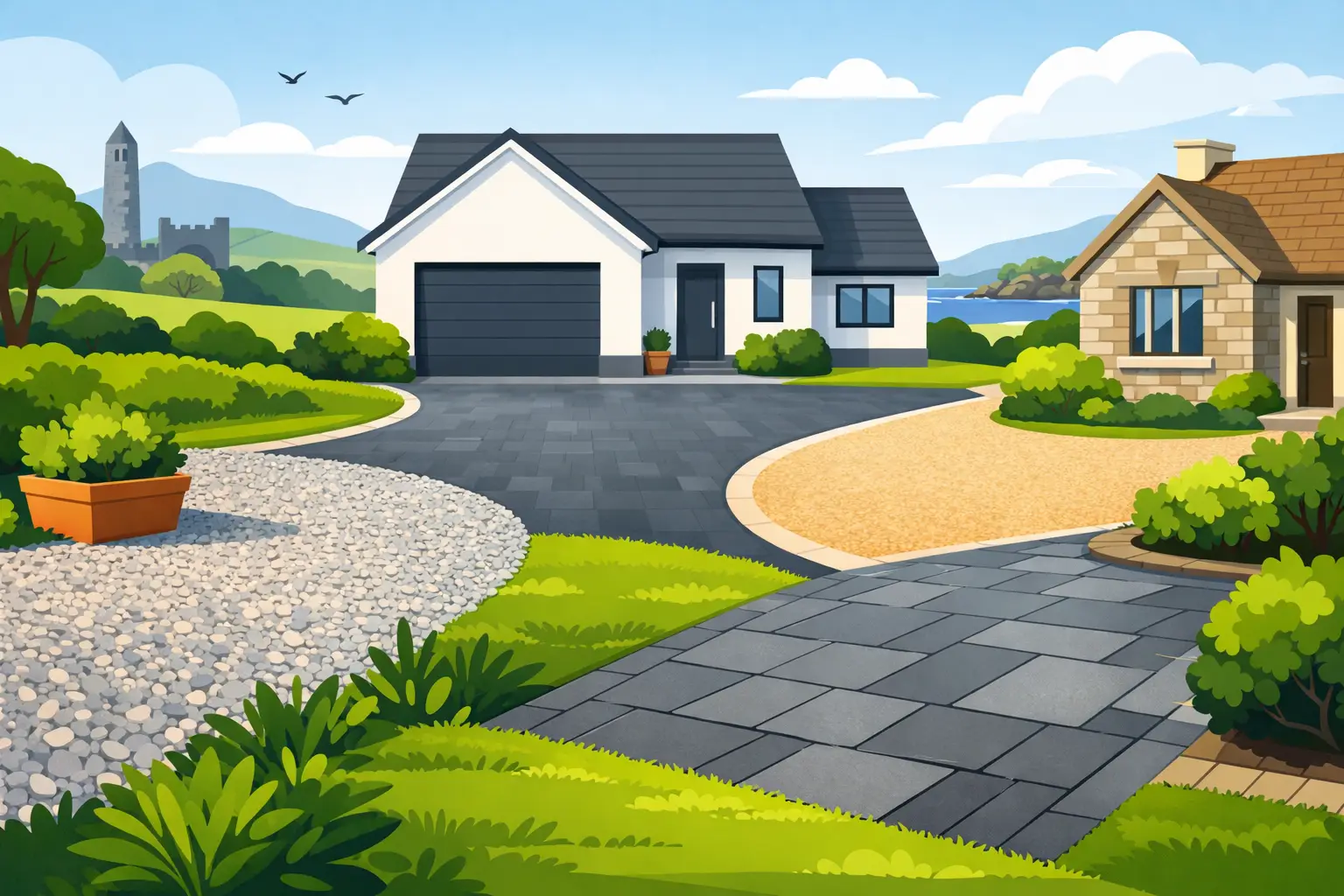
A driveway should still look orderly after a wet winter, a week of falling leaves and the daily movement of family cars. That is why homeowners searching for the best low maintenance driveways need to look beyond the initial appearance of a surface. The right choice reduces weeding, puddling, loose material and regular repair, while giving the front of the property a finish that suits the home.
For Dublin and Wicklow properties, rainfall and drainage are central to the decision. A surface that copes well with water, has a properly prepared base and is installed with suitable falls will usually be easier to live with than one chosen solely because it has the lowest upfront price.
What makes a driveway genuinely low maintenance?
No driveway is entirely maintenance-free. Even premium surfaces benefit from occasional sweeping and washing, particularly beneath trees or near planting beds. The difference is how often that work is needed and whether neglect leads to weeds, standing water, staining or movement under vehicles.
A low-maintenance driveway has a stable sub-base, controlled drainage and a finish suited to the traffic it will carry. It should resist common problems such as cracking, loose aggregate, tyre marks and moss growth. The edges matter too. Weak or poorly restrained edges allow a driveway to spread and deteriorate, especially where vehicles turn or reverse repeatedly.
Before selecting a material, consider how many vehicles use the space, whether vans will access it, how shaded the area is, and where surface water currently goes. A driveway on a sloping site or one that regularly receives heavy rain may need a different drainage solution from a small, sheltered front garden.
The best low maintenance driveways compared
Resin bound stone: the strongest all-round option
For many homeowners, resin bound stone offers the best balance of appearance, drainage and day-to-day practicality. Natural aggregate is mixed thoroughly with a clear UV-stable resin before being laid over a prepared base. Unlike loose gravel, the stones are fully bound in place, creating a smooth, firm surface without scattered aggregate on the footpath or road.
The open structure allows water to pass through the surface when installed as part of a permeable system. This can help reduce puddles and supports Sustainable Drainage Systems requirements, often referred to as SUDS. It is particularly useful for homes where rainwater management is a concern or where a conventional impermeable driveway would require additional drainage measures.
Resin bound driveways need little more than periodic sweeping and a gentle clean to remove dirt, leaf matter and surface algae. With more than 40 aggregate colour options available, they also allow a more tailored finish than standard tarmacadam. Lighter blends can brighten a dark frontage, while warmer mixes sit naturally beside brick, stone and planted borders.
The trade-off is that resin bound surfacing depends heavily on preparation. It needs a sound, suitable base and dry conditions during installation. A thin layer applied over a failing base will not solve underlying movement or drainage problems. When the excavation, groundwork and edging are managed correctly, however, it is a durable, attractive option with very little routine upkeep.
Tarmacadam: practical and hard-wearing
Tarmacadam remains a sensible choice for busy driveways, larger entrances and areas that need a clean, durable black finish. It is quick to use, handles regular vehicle traffic well and is straightforward to sweep. A well-laid tarmacadam driveway can give a property a neat, uniform appearance without the joints found in block paving.
It is usually less decorative than resin bound stone and is not naturally permeable. Water must therefore be directed to suitable drainage points through the driveway’s levels, channels or gullies. On some sites, this is simple to achieve; on others, drainage design may affect the overall cost and suitability.
Tarmacadam can soften slightly in very warm conditions and may show marks from heavy turning movements, particularly on tight parking areas. It also benefits from prompt attention if cracks develop, as water entering the base can cause greater damage over time. For homeowners who value a straightforward, durable surface over a decorative finish, it is still one of the most reliable low-maintenance choices.
Gravel: lower initial cost, more regular attention
Gravel is often selected for its traditional appearance and comparatively modest installation cost. It is permeable by nature and can work well on rural-style homes, long entrances and properties where a softer, less formal look is wanted.
However, gravel is not the lowest-maintenance option in daily use. Stones migrate under tyres, collect at gates and spill into paths. It needs raking, topping up and good edge restraints to keep it presentable. Weeds can also establish through accumulated organic matter unless the base and membrane are properly installed.
For a low-traffic area, decorative gravel can be a good fit. For a family driveway used several times each day, resin bound stone often provides the visual character of aggregate without the repeated tidying.
Concrete and block paving: durable, but joints need care
Concrete offers a solid, long-lasting driveway when laid correctly, and it can be finished in different textures or colours. Its main limitation is drainage. Traditional concrete is impermeable, so water needs to be carefully managed. Cracking is also possible if the ground moves or the slab is not properly constructed with suitable joints.
Block paving gives a more detailed, traditional finish and makes local repairs possible if a small area is damaged. Yet the joints are its maintenance point. Sand can wash out, weeds can appear, and the surface may settle if the base is inadequate. Regular brushing, jointing sand and occasional cleaning keep it looking its best, but it requires more attention than a continuous resin bound or tarmacadam surface.
Do not overlook the groundwork
The surface is the visible part of the project, but the base determines how it performs. A quality driveway installation begins with assessing the existing ground, excavating to the required depth, building a stable sub-base and setting levels that move water safely away from the property.
This is where low-maintenance claims are tested. A driveway may look excellent on completion but develop dips, cracks or pooling if poor ground is left untreated or if drainage was treated as an afterthought. Clay soils, tree roots, old concrete and previous patch repairs can all affect the method required.
A full-service contractor should explain what will happen below the finished surface as clearly as what will be seen above it. Ask whether excavation, disposal, edging, drainage and final surfacing are included in the quote. Itemised pricing helps homeowners compare like with like and avoids unexpected additions once work has started.
Choosing the right surface for your property
Resin bound stone is often the best choice where you want a premium, permeable finish with minimal day-to-day work. It suits modern and traditional homes alike, and it is especially appealing where kerb appeal and water management matter equally.
Tarmacadam may be the better fit for a large driveway, a heavily used entrance or a property where a simple, resilient finish is the priority. Gravel is worth considering where budget and a natural look take precedence, provided you are comfortable with occasional raking. Block paving and concrete can work well in the right setting, but they demand more attention to joints, cleaning or drainage.
The most cost-effective option is not always the cheapest surface on day one. A driveway that requires frequent topping up, weed treatment, patching or drainage repairs can become the more expensive choice over several years. It is better to match the finish to the site and have the foundation built properly from the start.
Keeping a new driveway looking its best
A simple seasonal routine is normally enough. Sweep away leaves before they break down, especially in autumn. Rinse off soil and road grime when needed, and deal with moss or algae early in shaded areas using an appropriate cleaner. Avoid harsh solvents and pressure washing at excessive force, as these can affect some surfaces or dislodge jointing material.
Keep planting beds and lawn edges from spilling soil onto the driveway, and check that gullies or drainage channels remain clear. If you notice a new dip, crack or persistent puddle, arrange an inspection rather than waiting for the problem to grow.
For homeowners who want a surface designed around local conditions, Resin Bound Dublin can manage the process from consultation and groundwork through to drainage and final installation. The best driveway is the one that remains dependable long after the installation day – neat underfoot, reliable in rain and easy to enjoy without adding another weekend job to the list.
Leave a Reply