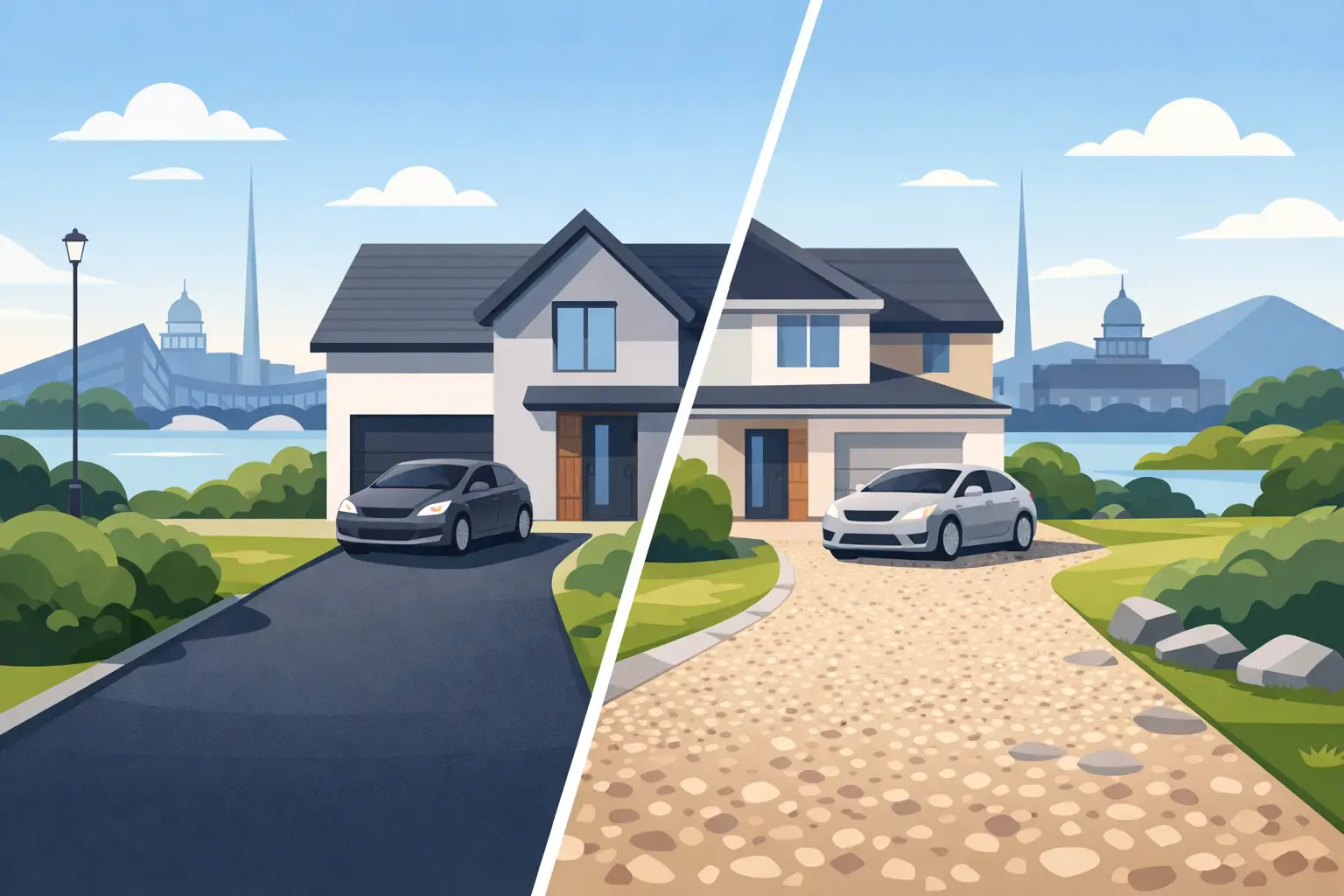
A driveway has to cope with more than parked cars in Dublin and Wicklow. It faces frequent rain, winter frost, turning tyres, foot traffic and the daily pressure of keeping a property looking well cared for. When comparing tarmac vs gravel driveways, the right choice usually comes down to how you use the space, the condition of the ground beneath it and how much maintenance you are prepared to take on.
Both materials have a place. Tarmacadam provides a neat, firm and hard-wearing finish, while gravel gives a traditional appearance and can be a more economical option at the outset. The better surface is not simply the cheaper one or the one that looks best on day one. It is the one installed on the right foundation, with proper edging and drainage, for the way your household uses the driveway.
Tarmac vs gravel driveways: the practical difference
Tarmacadam is a bound surface made from aggregate and bitumen, laid hot and compacted to create a smooth, continuous finish. On a properly prepared base, it gives cars, bikes, bins and pedestrians a stable route with no loose stones underfoot. It is a familiar choice for busy family homes, shared entrances and commercial areas because it handles regular vehicle use well.
Gravel consists of loose decorative stone laid over a prepared sub-base, normally contained by kerbs, timber or other strong edging. It has a natural, informal character that suits rural properties, period homes and larger driveways. Water can pass through the gaps between stones, which is useful where surface water needs to drain away rather than sit on top of the driveway.
The key difference is movement. A tarmac surface is fixed in place once installed. Gravel is designed to remain loose, so it will naturally shift under tyres and shoes. That does not make gravel unsuitable, but it does mean that the groundwork and ongoing care matter more.
Cost: look beyond the initial quotation
Gravel is often less expensive to install than tarmac, particularly for a large driveway with straightforward access. The material itself is comparatively affordable, and a decorative stone finish can make a substantial area look attractive without the cost of a bound surface.
However, a lower starting price does not automatically mean lower lifetime cost. Gravel driveways need periodic raking, topping up and clearing of stones that have travelled onto paths, lawns or the road. If the sub-base is weak or the edges are poorly installed, vehicle wheels can create ruts and push gravel into surrounding areas. These issues can usually be corrected, but they add to the work required over time.
Tarmacadam normally has a higher upfront cost because the installation involves excavation, a suitable stone base, compaction and professional laying equipment. It can be a sound long-term investment for households that want a stable, low-maintenance finish. A detailed quotation should make clear what depth of excavation, sub-base, edging, drainage and finishing work is included. Comparing figures without comparing the specification can lead to disappointing results.
Drainage and Irish weather conditions
Drainage should be considered before deciding on appearance. A driveway that allows water to pool can deteriorate faster, become slippery in cold weather and direct runoff towards the house or neighbouring land.
Gravel is naturally permeable when installed over a free-draining foundation. Rainwater can filter through the stone rather than running across the surface. This is one reason it works well for properties with generous space, existing drainage concerns or a preference for a softer landscape-led finish. Fine particles and soil can gradually build up within the gravel, though, reducing its drainage performance. Periodic cleaning and replenishment help keep it functioning as intended.
Standard tarmac is not permeable. Water needs to be managed through carefully planned falls, drainage channels, gullies or other suitable drainage measures. That does not rule it out for a Dublin or Wicklow home. It simply means drainage must be included in the design from the beginning, rather than treated as an afterthought once the surface is down.
Ground conditions also matter. Clay-heavy soil, sloping sites and driveways that receive runoff from higher ground all need particular attention. An experienced contractor will assess the existing levels, identify where water is travelling and prepare the base accordingly. The visible finish is only as reliable as the groundwork beneath it.
Maintenance: how much time do you want to spend?
For homeowners seeking the easiest day-to-day option, tarmacadam usually has the advantage. Sweeping away leaves, washing off mud and dealing with occasional weeds around the edges will keep it looking tidy. A well-laid surface can withstand everyday traffic without needing regular adjustment.
Tarmac can develop cracks over time, especially where drainage is poor, tree roots move beneath the base or heavy vehicles regularly use an area designed for domestic cars. Prompt repairs are worthwhile, as small defects can allow water into the layers below. This is another reason to avoid thin surfaces or shortcuts in base preparation.
Gravel requires more active upkeep. Tyres can create tracks, particularly near gates, on slopes and where vehicles turn sharply. Stones can be displaced after heavy rain or busy periods, and weeds may appear if the base and membrane are not properly considered. Raking the surface occasionally keeps it level, while topping up the stone helps retain a full, even appearance.
There is also a practical household consideration. Gravel can be less convenient for wheelie bins, pushchairs, high heels, bicycles and anyone with limited mobility. A firm path beside a gravel drive can solve some of these issues, but it should be planned as part of the overall layout.
Appearance and kerb appeal
Tarmac gives a clean, formal finish that works with most property styles. Its dark colour provides a sharp contrast against lawns, paving and brickwork, and it can make a compact driveway feel ordered and uncluttered. Edging in granite, concrete kerbs or block paving can add definition and protect the perimeter from breaking down.
Gravel offers more variation in colour, texture and size. A light golden stone may suit a traditional home, while grey or charcoal gravel can create a more contemporary look. It can also soften the visual impact of a wide front garden, especially when combined with planting. The trade-off is that it will never have the perfectly uniform appearance of a freshly laid bound surface.
Consider the setting rather than choosing from a sample alone. Dark tarmac can show dust and pollen in dry weather, while pale gravel may show mud, leaf staining and tyre marks. A good driveway design should complement the house, manage water effectively and leave enough practical space for parking, turning and access.
Durability and traffic levels
For regular car use, multiple vehicles or a narrow entrance where tyres turn in the same place every day, tarmacadam is generally the more durable choice. Its continuous surface spreads the load and does not scatter under normal domestic traffic. It is particularly practical for households that want reliable access in all weather.
Gravel can also last well when it is installed on a stable, correctly compacted sub-base with strong containment. It is best suited to lower-speed traffic and homes where the owners accept the need to redistribute the stone. Steep driveways can be challenging, as gravel tends to migrate downhill, while frequent deliveries or heavy vehicles can create ruts more quickly.
Neither surface should be laid directly onto soil. Excavation to the appropriate depth, a compacted foundation, suitable geotextile where needed and carefully formed edges are what prevent sinking, spreading and premature failure. At Resin Bound Dublin, this full groundwork stage is treated as part of the job, not an optional extra.
Which driveway surface is right for your property?
Choose tarmacadam if you want a smooth, stable driveway with straightforward maintenance, regular vehicle use and a crisp, consistent finish. It is often the sensible choice for busy homes, tighter sites and entrances where cars frequently turn or reverse.
Choose gravel if permeability, a natural appearance and a lower initial outlay are your priorities. It can be an excellent solution for larger properties and traditional settings, provided you are comfortable with occasional raking, topping up and loose stones.
Some properties benefit from combining materials. For example, a tarmac entrance and parking area can be paired with gravel borders or a gravel section away from the main wheel tracks. This can preserve the desired appearance while keeping the highest-use areas practical.
Before committing to either finish, ask for a site assessment that looks at levels, drainage, access and the condition of the existing driveway. The best result is not determined by the surface alone. It comes from a well-prepared base and a design that will still work properly after years of Irish weather, family life and everyday use.
Leave a Reply