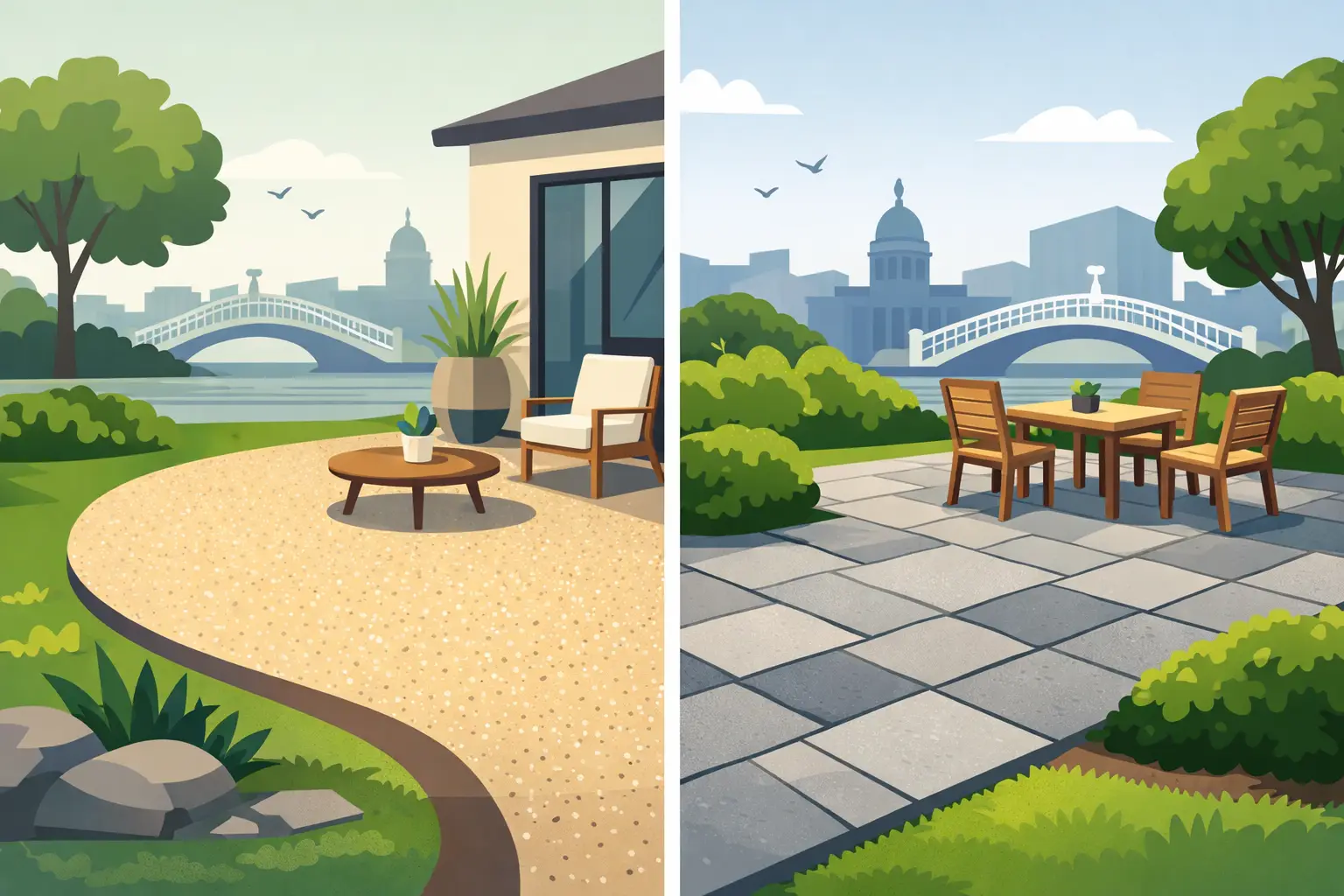
A patio has to cope with more than summer dining. In Dublin and Wicklow, it must handle persistent rain, shade, falling leaves, muddy shoes and the daily movement between house and garden. When comparing resin patios vs paving slabs, the best choice is not simply the one that looks best on the first day. It is the surface that suits your garden levels, drainage, budget and the amount of maintenance you are realistically prepared to do.
Both can create an attractive, hard-wearing outdoor area. The difference lies in how they manage water, how they age and how much preparation is needed underneath. A proper assessment of the existing ground is the sensible starting point, particularly where a patio sits close to the house or meets a driveway or pathway.
Resin patios vs paving slabs: the key differences
A resin bound patio is made by mixing natural aggregate with a clear resin and hand-trowelling it across a prepared base. The finished surface is smooth underfoot but textured enough for grip, with no individual joints across the main area. With the correct permeable base beneath, rainwater passes through the surface and drains naturally into the ground.
Paving slabs are individual units laid on a prepared bed, normally with joints filled between each slab. They are available in concrete, porcelain, sandstone, granite and other materials, so they offer a wide range of styles. Water generally runs across the slab surface towards a fall, channel drain or drainage point rather than through it.
Neither option is automatically right for every property. A formal period garden may suit the defined lines and natural variation of stone paving. A contemporary garden, or one where drainage is a concern, may benefit from the clean, continuous finish of resin bound surfacing.
Appearance and design flexibility
Paving has a recognisable, structured look. Large porcelain slabs can make a compact patio feel calmer and more modern, while sandstone and granite bring texture and character. Patterns, borders and contrasting joint colours can add detail, although more cuts and features usually increase labour and cost.
Resin bound patios create a more uniform finish. With more than 40 aggregate colour blends available, it is possible to complement brickwork, render, fencing and existing driveway surfacing without relying on a standard grey finish. Curves, irregular garden edges and transitions into paths are generally easier to achieve because the material is laid as one continuous surface.
The choice comes down to preference as much as performance. If you want visible lines, defined geometry and a traditional patio appearance, slabs may be the better fit. If you prefer a tidy, joint-free surface that can visually link several parts of the garden, resin bound is often more suitable.
Drainage in Irish weather
Drainage is one of the most meaningful differences. A correctly installed resin bound system is permeable. Rainwater filters through the aggregate and base course, helping to reduce standing water and surface run-off. This can support SUDS-compliant drainage when the full construction, ground conditions and base specification are appropriate.
That does not mean resin can be laid over any old patio and expected to drain. The base must be stable, correctly graded and designed for permeability. Soft ground, poor drainage below ground level or water running towards the house must be addressed during the groundwork stage. A surface is only as reliable as the structure underneath it.
Paving slabs can also perform well in wet conditions, but they rely on accurate falls and drainage detailing. If the patio has settled, if joints have deteriorated, or if the fall directs water towards the property, puddles can develop. On a well-built patio this is avoidable, but it requires careful levels from the beginning.
Maintenance and day-to-day use
A resin bound patio is low maintenance rather than maintenance-free. Regular sweeping removes leaves, soil and debris that could sit on the surface. An occasional gentle clean will keep the aggregate looking fresh, especially in shaded gardens where algae can form. Weed growth is usually far less common than with paving because there are no open joints, though airborne seeds can still settle on top of any outdoor surface.
Slab patios need more attention around the joints. Jointing material can erode over time, allowing weeds to take hold or individual slabs to become less secure. Moss and algae often build up on textured stone and on north-facing areas. Pressure washing can help, but aggressive use may damage joints or alter the surface of some natural stone.
For families, both surfaces work well for tables, chairs and everyday garden use. Resin bound offers a comfortable, even walking surface and avoids the small gaps that can catch chair legs. Paving is equally practical when laid correctly, although heavily textured stone can be less comfortable for bare feet and more difficult to keep clean around outdoor furniture.
Durability and repairs
Quality paving can last for decades, particularly granite, porcelain and well-installed natural stone. Its advantage is that a damaged slab can sometimes be lifted and replaced. The practical challenge is matching an older slab, especially where weathering has changed the original colour.
A professionally installed resin bound patio is durable and flexible enough for normal pedestrian use, garden furniture and the changing weather conditions experienced locally. The surface should be specified for its intended use. A patio is different from a driveway, and a route used for wheelie bins or regular vehicle access may need a stronger construction.
Localised resin repairs are possible, but an exact colour match may be difficult after years of weathering. This is one reason experienced installation matters: proper base preparation, premium UV-stable materials and neat edge restraint reduce the risk of cracking, movement and premature wear.
Cost is about the whole build, not just the finish
It is tempting to compare a square-metre price for resin against the price of a slab from a supplier. That rarely gives a useful answer. The final cost of either patio depends heavily on excavation, access, spoil removal, drainage, edging, levels and the condition of the existing base.
Budget concrete slabs can be less expensive at the outset, while porcelain, high-quality natural stone and detailed laying patterns can move paving into a premium price range. Resin bound surfacing is also a premium option, particularly where a new permeable base is required. However, its drainage benefits, tidy appearance and lower joint maintenance can make it a strong long-term investment.
Ask for an itemised quotation that separates preparation, drainage and surfacing. It makes it easier to understand what is being built and avoids a low initial figure becoming more expensive once hidden groundwork issues appear.
When paving slabs are the better choice
Paving may be the better option where you want a traditional or architectural look that suits the house, particularly with period properties or established stone garden walls. It can also be a sensible choice if you want to match existing paving exactly, or if the patio has a straightforward layout with reliable drainage already in place.
It is worth choosing slabs for their genuine visual appeal, not because they appear simpler to install. Large-format paving demands accurate levels, strong preparation and careful handling. Poorly laid slabs can rock, crack or hold water just as quickly as a poorly prepared resin surface can fail.
When a resin bound patio makes more sense
Resin bound is particularly effective for homeowners who want a contemporary, clean finish with minimal joints and a permeable surface. It suits curved layouts, pathways flowing from the patio, and gardens where managing rainwater is a priority. It can also provide a consistent look between a patio, front path and resin bound driveway.
The key requirement is a sound, suitable base. Resin Bound Dublin assesses the full project, including excavation, drainage, groundwork and finishing, rather than treating the visible surface as a standalone job. That approach is particularly valuable on properties with uneven gardens, restricted access or drainage concerns.
Choose the installer as carefully as the surface
Whether you select resin or slabs, workmanship determines how the patio performs. Check how the contractor will deal with falls, drainage, edge restraints, sub-base depth and existing ground conditions. For resin, ask whether the system is resin bound rather than resin bonded, whether the aggregate and resin are UV stable, and what guarantee applies to the materials and installation.
A patio should feel straightforward once it is complete: water should drain as intended, furniture should sit level, and the finish should remain neat through the seasons. The most useful next step is a site-specific consultation that considers your garden, not just a photograph or a price per square metre.
Leave a Reply