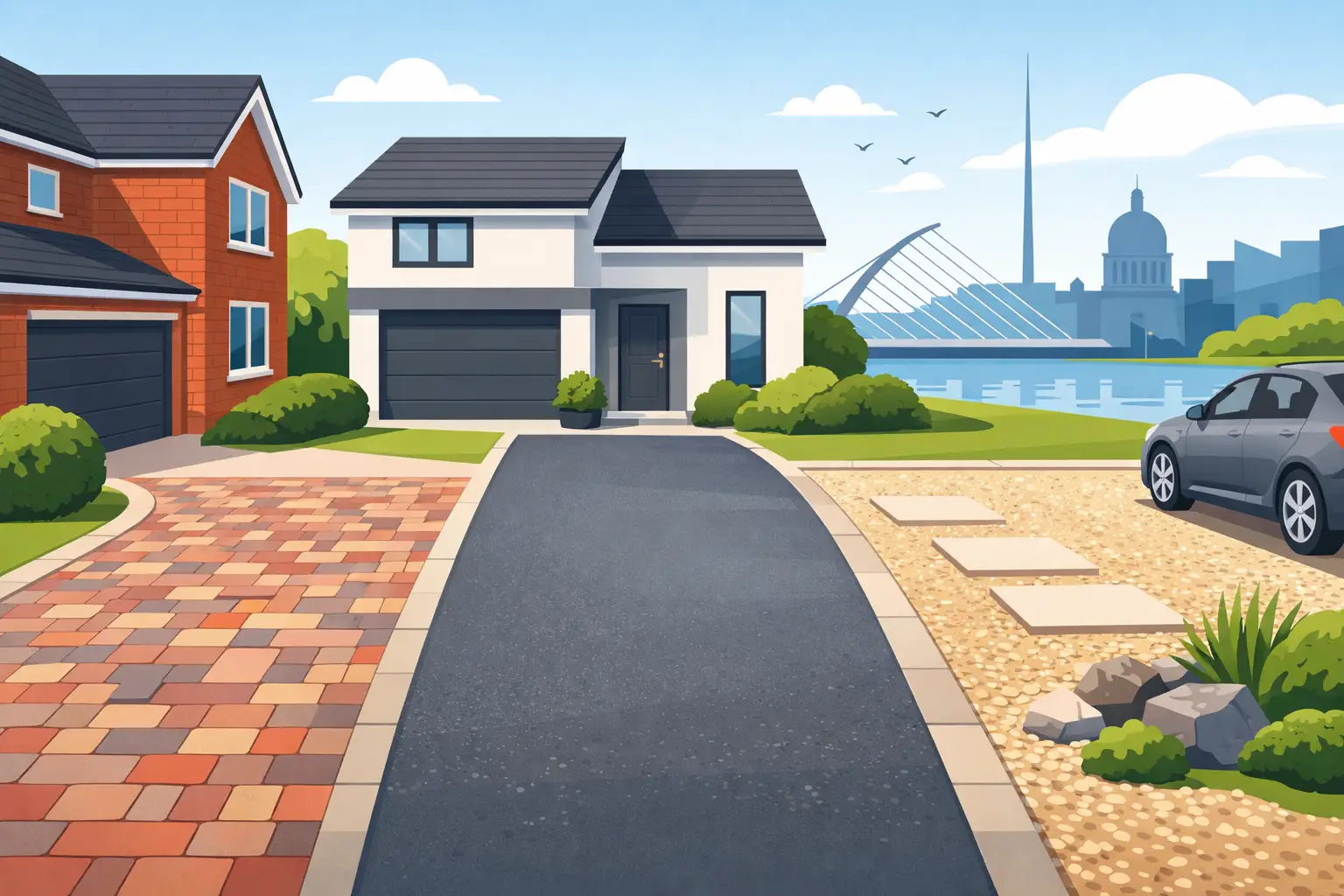
A driveway has to cope with far more than parked cars. In Dublin and Wicklow, it must handle regular rainfall, wet leaves, turning wheels, family traffic and the first impression of a property. The best driveway surfaces for homes balance appearance with drainage, durability and the level of maintenance you are genuinely prepared to do.
There is no single right material for every house. A smooth, contemporary resin bound driveway may suit a front garden where kerb appeal and permeability matter most, while tarmacadam can be the practical choice for a larger area with heavier use. Gravel remains attractive for rural homes and generous drives, but it needs the right edging and ongoing attention to stay neat.
What makes a driveway surface right for your home?
Before choosing a colour or finish, consider how the driveway will perform underneath and after rain. The finished surface matters, but the excavation, sub-base and drainage design are what determine whether it remains level and reliable over time.
A good decision usually comes down to four practical questions:
- Does the existing ground drain well, or does water sit near the house, garage or public footpath?
- How many vehicles will use the area, including vans, delivery vehicles or cars turning frequently?
- Do you want a low-maintenance finish, or are you comfortable raking, weeding and occasional repairs?
- Does the driveway need to complement a period property, a modern home, gates, paving or garden walls?
For many front driveways, permeability is a key consideration. A permeable surface allows rainwater to pass through the finish and into a correctly prepared base, reducing standing water and helping support Sustainable Drainage Systems, commonly known as SuDS. This is particularly valuable where hard landscaping is replacing a lawn or planted area.
Resin bound driveways: premium appearance with permeability
Resin bound is one of the strongest options for homeowners who want a clean, hard-wearing and decorative driveway without loose stone underfoot. It is made by mixing dried natural aggregate with UV-stable resin before it is laid by hand as a smooth, seamless surface. Unlike resin bonded finishes, where stone is scattered onto a resin layer, resin bound aggregate is fully mixed through the material.
When installed over a suitable permeable base, resin bound surfacing allows water to drain through it. That makes it a sensible choice for homes where puddles, runoff and drainage compliance are central concerns. It is also comfortable to walk on, works well for paths and patios, and gives a consistent finish from the pavement to the front door.
Colour choice is another advantage. Natural aggregate blends can be selected to suit red brick, stone, rendered walls or contemporary grey finishes. A carefully chosen border can define parking bays or tie the driveway into existing paving without making the front of the house look overdesigned.
Where resin bound works best
Resin bound is particularly well suited to medium-sized and large residential driveways, shared entrances, pathways and front gardens where a polished finish is wanted. It offers low day-to-day maintenance, as there are no loose stones to sweep back into place. Regular brushing and occasional cleaning are normally enough to keep it looking smart.
The trade-off is that resin bound surfacing depends on proper preparation. It cannot compensate for a weak, moving or poorly drained base. Cracks, soft spots and failed drainage need to be dealt with before the resin surface is laid. It is also a specialist installation, so material quality, weather conditions and the experience of the installation team all matter.
Tarmacadam: dependable for busy driveways
Tarmacadam remains a practical, familiar driveway surface for good reason. It creates a tidy, durable finish that suits homes with frequent vehicle use, long drives and areas where a simple, understated appearance is preferred. It is commonly finished in black, although red tarmacadam can work well around traditional homes or where a warmer look is wanted.
A professionally installed tarmac driveway is smooth, easy to maintain and resistant to everyday wear. It is especially useful where the area includes a sloping entrance or needs to accommodate several cars. Edging kerbs, granite sets or block borders can lift the appearance and help retain the surface at its edges.
Standard tarmacadam is not inherently permeable, so drainage must be considered as part of the overall design. Depending on the site, this may involve falls away from the property, drainage channels, gullies or a suitable soakaway arrangement. The correct solution depends on ground conditions and where water can safely discharge.
Tarmac is often a sensible choice when performance and value are the priorities. It does not offer the same range of natural colours and textures as resin bound, and it can soften in exceptional heat or mark under sharp turning movements. However, with sound groundwork and proper compaction, it is a reliable surface that serves many homes well.
Gravel driveways: character and value for the right setting
Gravel has a natural, traditional appearance that works particularly well with country homes, larger properties and drives surrounded by mature planting. It is usually one of the more cost-effective finishes for a sizeable area, and its loose structure allows water to drain through when the base beneath is properly designed.
The character of gravel is part of its appeal. From warm golden tones to granite grey, the stone can soften the appearance of a driveway and sit comfortably alongside lawns, hedges and stone walls. The sound of tyres on gravel can also provide a modest sense of security at an entrance.
Its limitation is movement. Stones migrate towards gates, footpaths and roads, particularly where cars turn sharply or the drive has a slope. Good-quality edging and a stabilisation grid can make a significant difference, but gravel will still need periodic raking and topping up. It may not be the best fit for households seeking a completely smooth surface for prams, wheelie bins, bikes or limited-mobility access.
Block paving and concrete: structured but maintenance-aware choices
Block paving gives a formal, patterned finish and can be repaired in small sections if a local area becomes damaged. It offers plenty of design flexibility, from traditional rectangular blocks to more contemporary large-format styles. However, joints can attract weeds if they are not maintained, and a poorly prepared base can lead to settlement and unevenness over time.
Concrete can be a durable option for utility areas and straightforward parking spaces. It is strong and can be finished in different textures, but plain concrete can look stark in a residential setting. As with standard tarmac, surface water needs to be managed carefully because conventional concrete is impermeable. Cracking can also be more noticeable and harder to blend into the surrounding area than a local repair in block paving.
Both surfaces can work well when they suit the house and are installed on a properly compacted foundation. The choice is often more about the visual style you want and the maintenance you are willing to take on than a simple question of strength.
Compare the best driveway surfaces for homes by priority
If permeability and a premium, low-maintenance appearance are at the top of your list, resin bound is often the leading option. It is especially effective when paired with a permeable base and a considered drainage plan.
If your driveway receives regular traffic, covers a large area or needs a straightforward hard-wearing finish, tarmacadam is a dependable choice. It offers a clean result without the design flexibility of resin bound, but it performs very well when installed correctly.
If you want a natural look and have the space for a driveway that benefits from soft landscaping, gravel can be excellent value. Just allow for routine upkeep and ensure it is retained with proper edges. For a more formal layout with patterns and borders, block paving may be the better visual fit, provided ongoing joint maintenance is not a concern.
The groundwork matters as much as the surface
The most attractive driveway finish will not last if water is trapped beneath it or the ground has not been excavated and compacted correctly. A professional assessment should look at existing levels, soil conditions, drainage routes, access, vehicle loads and any thresholds at doors or garages. The aim is to prevent water travelling towards the property while creating a stable base that can carry the surface for years.
This is why an itemised quotation should explain more than the top layer. It should set out excavation, removal of spoil, sub-base preparation, edging, drainage and the chosen surface depth. Ask how the installer will manage existing cracks or soft ground, whether the proposed system is permeable, and what guarantee applies to the materials and workmanship.
For homeowners who want one contractor to manage the project from start to finish, Resin Bound Dublin provides consultation, groundwork, drainage and final surfacing across Dublin and Wicklow. That joined-up approach helps avoid the common problem of choosing a finish first and discovering drainage or base issues after work has begun.
The best result is rarely the cheapest surface laid quickly. Choose the material that suits your home, then give equal attention to the ground beneath it. A well-planned driveway should look right on the day it is finished and still deal confidently with an Irish winter years later.
Leave a Reply