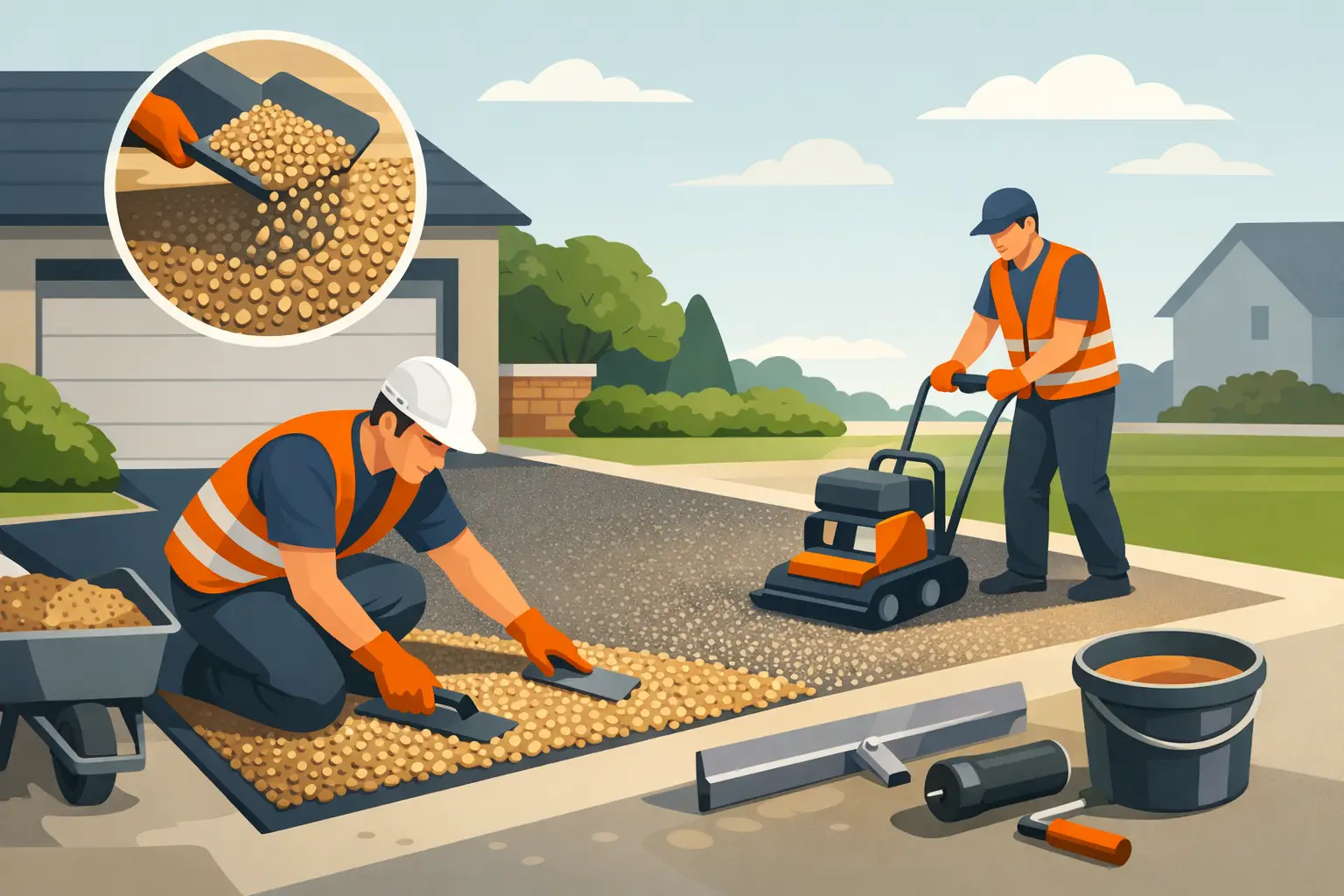
A resin bound driveway is only as reliable as the groundwork beneath it. The finished surface may look simple, with natural stone held in a smooth resin finish, but a successful project depends on sound preparation, correct drainage and careful installation. This resin bound driveway installation guide explains what should happen at each stage, helping homeowners in Dublin and Wicklow understand the standard to expect from a professional contractor.
Start with the condition of the existing driveway
Before selecting aggregate colours or arranging installation dates, the site needs to be assessed properly. A contractor should inspect the existing surface, access for machinery, ground levels, drainage routes and the condition of any walls, gates, manholes or kerbs. This survey identifies whether the existing driveway can be retained as a base or whether excavation is needed.
Resin bound surfacing requires a stable, crack-free and properly constructed base. It is not designed to hide movement, deep cracks or poor drainage in an old driveway. In some cases, a sound concrete or tarmacadam surface can be prepared and overlaid. Where the existing base is weak, uneven or badly damaged, removing it and rebuilding the foundation is usually the better long-term decision.
This is often where quotations can differ. A lower initial price may allow for a thin overlay with limited preparation, while a full project price should clearly account for excavation, disposal, sub-base work, edging, drainage and final surfacing. An itemised quote makes it easier to compare what is actually included.
Plan drainage before the surface is laid
One of the main benefits of resin bound paving is permeability. Rainwater can pass through the resin-bound aggregate and into an appropriate permeable base below, reducing standing water and helping a driveway meet Sustainable Urban Drainage Systems requirements.
Permeability is not automatic, however. The complete construction must be designed to let water move away effectively. If the driveway is laid over an impermeable base, or if falls direct water towards the house or garage, the installation may still require channel drains, soakaways or another suitable drainage solution.
A professional assessment will consider the slope of the site and where rainwater currently collects. Dublin and Wicklow properties can have varied ground conditions, from compact urban plots to sloping rural entrances, so drainage details should be tailored to the location rather than copied from another job.
Build a stable sub-base
Where excavation is required, the contractor removes the old surface and unsuitable material to the required depth. The formation below is then levelled and compacted. A geotextile membrane may be installed where ground conditions call for separation between the soil and stone layers.
Next comes the sub-base, commonly made from well-compacted granular stone. Its depth depends on the ground, intended traffic and driveway design. A domestic driveway used by cars needs a different construction from an entrance that regularly carries vans, delivery vehicles or heavier commercial traffic.
Compaction is essential at this point. Loose stone may look level on the day, but it can settle after the driveway is finished, leading to low spots, movement or water pooling. Edging is also installed or secured before the resin surface goes down. Kerbs, stone borders or existing walls provide a clean finish and help contain the driveway structure.
Choose the right base for resin bound aggregate
The resin-bound layer is normally installed over a suitable tarmacadam base. This gives a consistent, durable and level platform for the aggregate and resin mixture. The tarmacadam needs adequate time to cure before resin bound material is applied. Laying too soon can create problems with bonding and surface performance.
Concrete can sometimes be used where it is structurally sound and suitably prepared, but it requires careful assessment. Concrete joints and cracks can transfer through a resin surface if they are not treated correctly. For this reason, the most reliable approach is not always the quickest one.
Select aggregate and resin for the job
Resin bound driveways use dried decorative aggregate mixed thoroughly with a clear polyurethane resin. The aggregate must be kiln-dried. Moisture, dust or contamination can affect the bond and may cause discolouration or weak areas in the finished surface.
Colour choice is more than a cosmetic decision. Lighter blends can brighten a shaded frontage, while natural golds, greys and browns often suit brickwork, stone and traditional homes. Darker mixes can look particularly smart alongside modern render and black-framed entrances, although they may show dust or tyre marks more readily. With more than 40 aggregate colour options available, it is worth viewing samples in natural daylight rather than choosing from a screen alone.
For driveways, the resin system must be suitable for vehicle traffic and the aggregate blend should have the right size and texture. A path or patio can sometimes use a finer, more decorative finish, while a driveway needs a mix that balances appearance, grip and strength.
Resin bound driveway installation: mixing and laying
Installation day requires organised preparation. The crew should check the weather forecast, protect nearby walls and surfaces, set out access routes and ensure all materials are ready before mixing begins. Resin bound aggregate has a working time once mixed, so there is little room for delays.
The resin components are measured and mixed first, then combined with the correct quantity of dried aggregate in a forced-action mixer. This type of mixer coats every stone evenly. Ordinary free-fall cement mixers are not suitable because they do not provide the same consistent result.
Once mixed, the material is transferred to the prepared base and hand-trowelled to an even depth. Skilled trowelling is what creates the smooth, uniform finish associated with quality resin bound paving. The installers work in planned sections, keeping a wet edge between mixes so joints are not visible across the driveway.
Care is needed around drains, inspection covers, steps and thresholds. Covers can be recessed and finished to blend with the surrounding surface while remaining accessible for future maintenance. Levels at doorways and garages must also be checked carefully so the new driveway does not create a trip point or direct water towards the property.
Allow for weather and curing time
Resin bound surfacing should be laid in dry, suitable conditions. Rain during installation can interfere with the resin, while very cold, humid or excessively hot conditions may affect curing and working time. A dependable contractor will postpone work if the weather is unsuitable rather than risk the quality of the finish.
After laying, the driveway needs to cure without foot traffic or vehicles. The exact period depends on the resin system and weather conditions, but homeowners should follow the installer’s instructions rather than assume the surface is ready because it feels firm. Premature use can mark the surface or affect its long-term performance.
It is also sensible to keep gardeners, delivery drivers and tradespeople off the area until the contractor confirms it is ready. Planning this around other building work avoids unnecessary damage to a newly completed driveway.
Check the finish before handover
At handover, the driveway should have an even texture and colour, neat edges, clear drainage routes and no loose aggregate. The contractor should explain curing requirements, aftercare and any manufacturer guarantee that applies to the materials used.
Resin bound surfaces are low maintenance, not no maintenance. Regular sweeping removes leaves and debris that can hold moisture on the surface. Occasional gentle washing helps keep the aggregate looking fresh. Avoid aggressive pressure washing, harsh solvents and metal shovels, as these can damage the resin or dislodge stone. Promptly clean oil spills where possible, particularly on lighter aggregate blends.
A well-built resin bound driveway should provide a hard-wearing, attractive entrance for many years, but the result depends on decisions made before the first aggregate is mixed. At Resin Bound Dublin, the focus is on managing those decisions properly, from excavation and drainage through to the final finish. When you are considering a new driveway, ask how the base, water management and curing will be handled – the answers will tell you far more than a colour sample ever can.
Leave a Reply