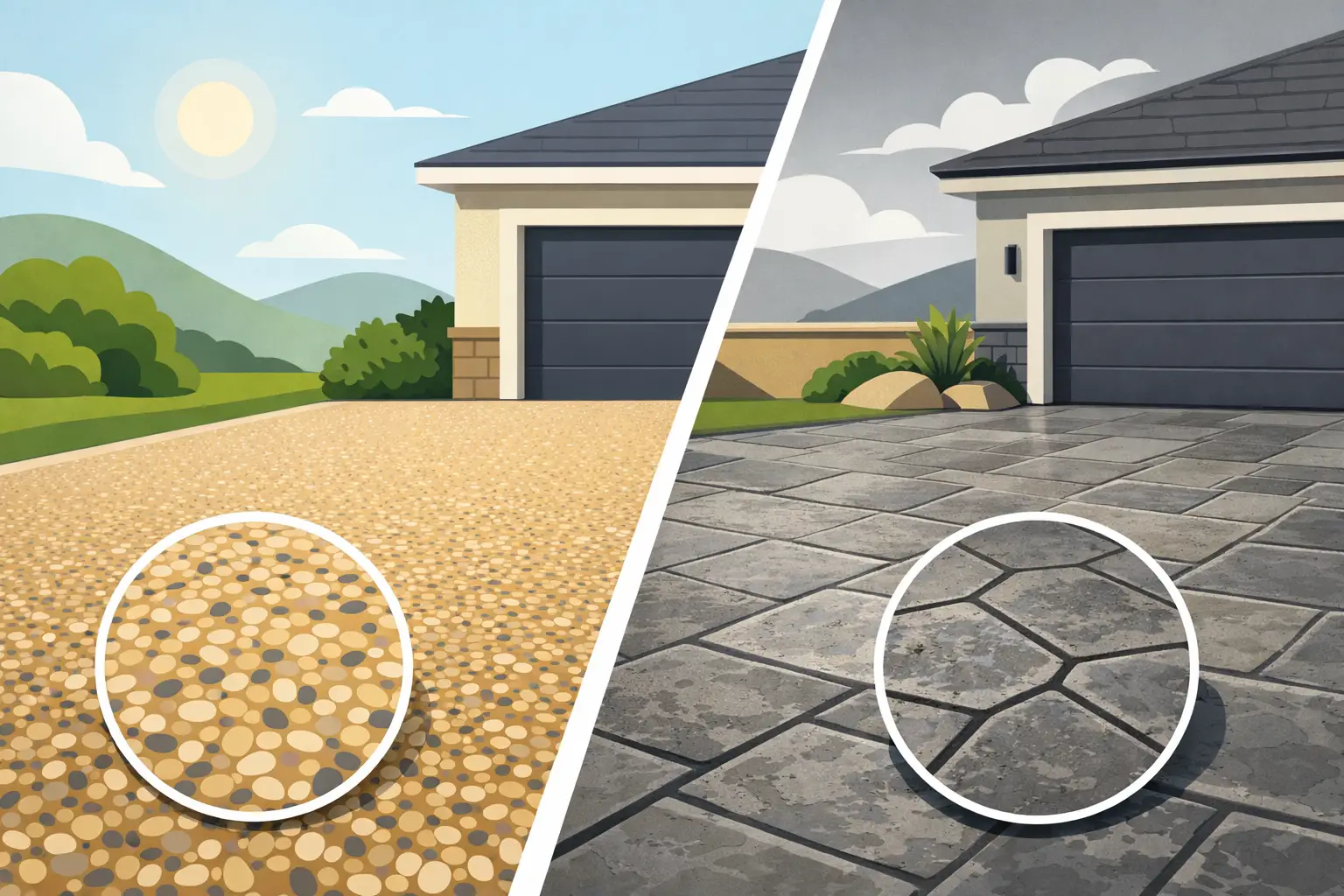
A driveway can look excellent on the day it is installed and still become a source of frustration a few winters later. Standing water, surface cracking, faded colour and slippery patches are common concerns for homeowners weighing up resin bound versus imprinted concrete. Both can create a smart, finished entrance, but they work in very different ways – particularly in the wet conditions experienced across Dublin and Wicklow.
Imprinted concrete is a poured concrete surface stamped with a pattern designed to resemble paving, cobbles, slate or stone. Resin bound surfacing combines dried natural aggregate with a clear UV-stable resin, laid as a smooth, decorative and permeable finish. The right choice depends on your existing ground conditions, drainage needs, preferred appearance and how much ongoing maintenance you are willing to take on.
Resin Bound Versus Imprinted Concrete: The Key Difference
The most significant difference is permeability. A correctly installed resin bound driveway is porous. Rainwater passes through the surface and into a suitable permeable base beneath, rather than sitting on top or running towards drains. This supports Sustainable Drainage Systems, commonly known as SUDS, and can reduce pressure on drainage around the property.
Imprinted concrete is generally impermeable. Water must be directed across the finished surface to channels, gullies or other drainage points. That does not mean it cannot be installed successfully, but drainage needs to be designed properly before work begins. On a sloping driveway, or where surface water already causes problems, this is a major practical consideration rather than a minor detail.
Resin bound also has a more natural, granular appearance. With more than 40 aggregate colour blends available, it can be selected to suit brickwork, stone, render or surrounding landscaping. Imprinted concrete gives a more uniform patterned look. It can be effective where the appearance of traditional paving is wanted without individual blocks, though the repeat pattern can be more noticeable on larger areas.
Drainage Matters on Irish Driveways
Dublin and Wicklow properties see their share of persistent rain, not just occasional heavy showers. A surface that sheds water poorly can lead to puddles by the front door, damp edges around walls and an untidy driveway that takes a long time to dry.
With resin bound surfacing, permeability relies on the whole build-up, not only the top layer. The aggregate and resin finish must be installed over a sound, open-textured and properly prepared base. If unsuitable materials or an impermeable layer are used beneath it, water cannot drain as intended. This is why excavation, base preparation and levels should be assessed as part of the initial survey.
An imprinted concrete driveway needs falls built into the slab so water moves towards planned drainage. This calls for careful groundwork and accurate finishing. Where a property has limited space for channel drains or no practical outfall, an impermeable surface may add unnecessary complications.
For homeowners looking to improve drainage while retaining a clean, premium finish, resin bound is often the more straightforward option. It is not a substitute for resolving serious drainage defects, but it can form part of a well-designed SUDS-compliant driveway system.
Appearance, Colour and Kerb Appeal
Imprinted concrete is chosen mainly for its ability to imitate other surfaces. Cobble, ashlar slate and brick-style patterns can give a formal look, especially on period-style homes or properties with existing stone details. Colour hardeners and release agents provide variation, but the finished result is tied to the selected pattern and can look less convincing where it meets genuine paving or natural stone.
Resin bound offers a different kind of finish. The surface is smooth underfoot but textured enough to show the individual stone. Colour blends range from warm golds and browns to contemporary greys, silvers and darker tones. Borders can also be created in a contrasting aggregate to define parking bays, paths or entrance areas.
Neither is automatically better on appearance. A neat resin bound surface generally suits modern homes, renovated front gardens and properties where a softer, natural finish is preferred. Imprinted concrete can be a good visual match when a more decorative, patterned driveway is the priority. Before deciding, view full-size completed areas rather than relying only on small samples.
Grip, Comfort and Everyday Use
Both surfaces can be suitable for vehicles when laid on an appropriate base. The practical difference is how they feel and perform day to day.
Resin bound aggregate has a lightly textured finish that provides useful grip for walking, including on paths and slopes. It is comfortable for pushchairs, wheelie bins and bicycles because there are no loose stones or joints to catch on. As the aggregate is fully bound in resin, it avoids the migration and raking associated with loose gravel.
Imprinted concrete can become slippery when wet, particularly if the sealant has worn smooth or surface algae has developed in shaded areas. A non-slip additive may be included in the sealer, but this needs to be renewed when resealing. Patterned concrete also has shallow recesses that can hold dirt and moisture.
For family homes, entrances used daily, or pathways where reliable footing matters, resin bound is usually the more forgiving surface. Good drainage and regular cleaning remain essential with either choice.
Maintenance and Long-Term Care
No driveway is completely maintenance-free. The question is whether the maintenance is light and predictable or more involved over time.
A resin bound driveway benefits from occasional sweeping and a gentle clean to remove leaves, soil and organic growth. Keeping the surface clear helps maintain drainage. Weed growth is uncommon through a properly installed resin bound surface, although seeds can settle on top and germinate if debris is allowed to build up. Small localised repairs can sometimes be blended into the existing finish, though an exact colour match may be affected by weathering.
Imprinted concrete requires a more regular resealing programme to protect the colour and finish. Over time, sealers can wear, dull or become patchy, particularly where cars turn, brake or park repeatedly. Cracks can also develop in concrete, and while they can be repaired, they rarely disappear completely. Repairs may be more visible across a patterned, coloured surface.
Fading is another consideration. Quality resin systems with UV stability are designed to retain their appearance well, while coloured concrete can lose depth over the years without proper resealing. This does not make imprinted concrete unsuitable, but it does mean its long-term appearance depends more heavily on planned upkeep.
Installation: The Base Is More Important Than the Finish
A good driveway starts below ground level. Whether choosing resin bound or imprinted concrete, the existing area must be excavated where necessary, stabilised, graded and built up with suitable materials for the expected use. A driveway carrying family cars needs a different construction from a decorative footpath.
For resin bound, installers generally need a stable, suitable base such as porous asphalt or permeable concrete, depending on the drainage design. The resin and aggregate are mixed on site and hand-trowelled to an even depth. The work demands careful timing, clean materials and trained installation, as the mix begins curing once prepared.
Imprinted concrete is poured, coloured, stamped and cut with control joints while the concrete is workable. It is then allowed to cure before sealing. Weather conditions, access for lorries and concrete delivery, and the size of the pour all affect planning. A large continuous slab can be installed efficiently, but changes after the concrete has been poured are difficult and costly.
In both cases, ask for an itemised quotation that explains excavation, disposal, base construction, drainage, edging and final surfacing. A lower headline price can exclude essential groundwork, leaving the homeowner to deal with unexpected costs later.
Cost: Look Beyond the Initial Quote
Costs vary according to access, excavation depth, drainage requirements, the condition of the current driveway and chosen materials. Resin bound can have a higher initial cost than a basic concrete installation because it requires premium dried aggregate, resin and a carefully prepared compatible base. However, its drainage performance and lower routine maintenance can add value over the life of the surface.
Imprinted concrete may appear more economical for larger areas, particularly where a substantial concrete base is already required. Its future sealing, cleaning and potential crack repairs should be included in the decision, not treated as an afterthought.
The most useful comparison is not simply price per square metre. Compare the full project scope, expected maintenance, drainage solution, guarantee and the standard of materials being specified. A driveway is a long-term part of the property, not a finish to choose solely on the cheapest first figure.
Which Surface Is Right for Your Property?
Choose resin bound if permeability, natural colour choice, clean edges and low-maintenance use are high on your list. It is particularly well suited to Dublin and Wicklow homes where rainwater management is a concern, as well as driveways that connect with paths, patios or landscaped front gardens.
Choose imprinted concrete if you strongly prefer the look of stamped cobbles, slate or decorative paving and have a clear drainage plan in place. It can create an attractive formal driveway, provided you are comfortable with periodic resealing and understand that cracks are a possibility with any concrete slab.
The best outcomes come from a site-specific assessment rather than selecting a surface from photographs alone. At Resin Bound Dublin, projects are planned from the groundworks and drainage upwards, so the finished driveway is built to perform as well as it looks. A clear survey, quality materials and experienced installation will do more for your driveway than any pattern or colour choice on its own.
Leave a Reply