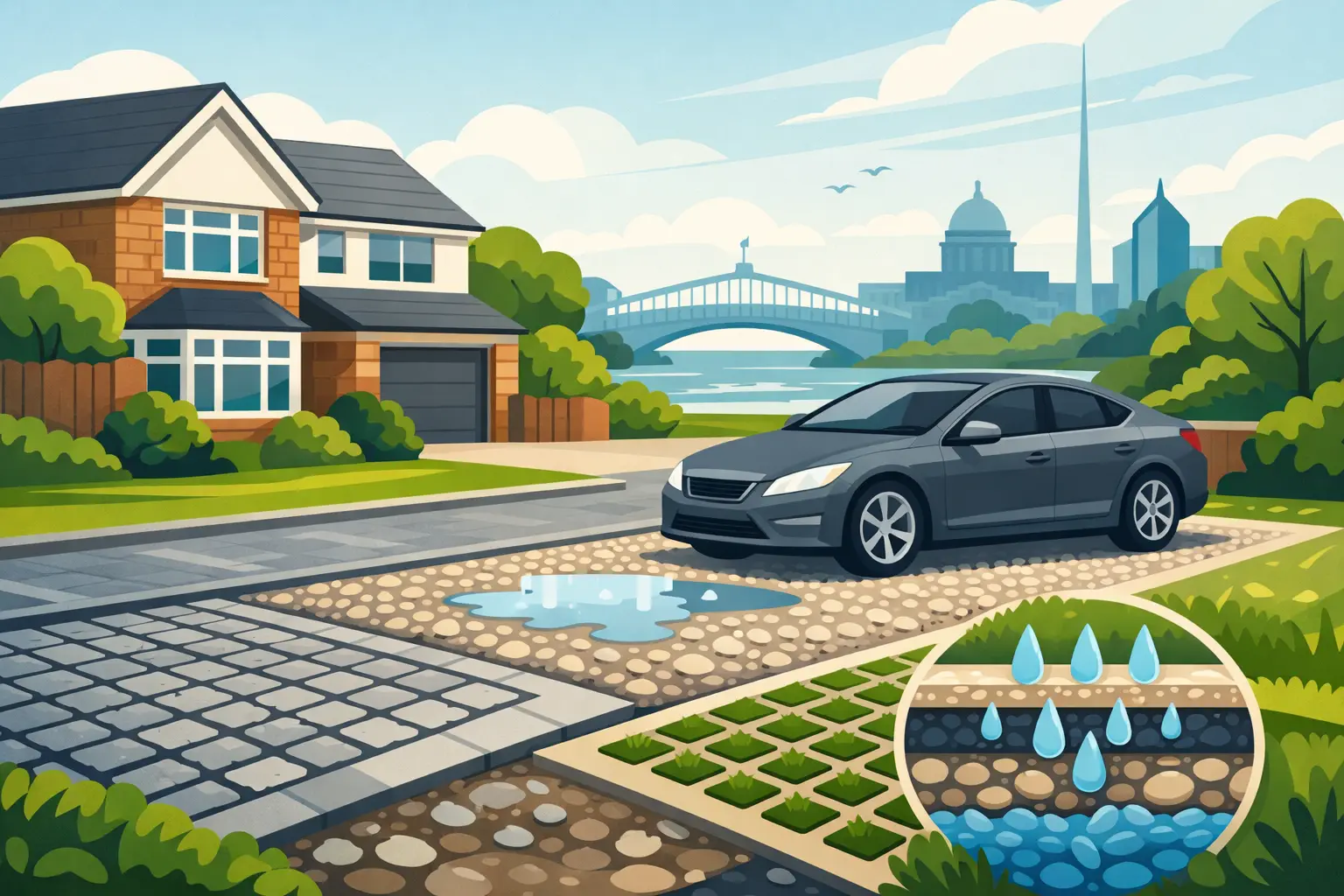
A Dublin driveway can receive a lot of water in a short spell. When rain has nowhere to go, it pools at the gate, runs towards the house or leaves a patio slippery long after the shower has passed. Permeable surfaces are designed to deal with that water at ground level, allowing it to pass through the finished surface and into a properly prepared sub-base below.
For homeowners in Dublin and Wicklow, that practical benefit is often just as valuable as the finished appearance. A well-designed permeable driveway, path or patio can improve day-to-day access, help reduce standing water and provide a clean, durable finish that complements the property.
What makes a surface permeable?
A permeable surface is not simply one with visible gaps. It is a complete construction system that lets surface water move through the top layer, then store, filter or gradually release it through the layers underneath. The finish, bedding layer, aggregate base and drainage design all need to work together.
Resin bound surfacing is a popular example. Natural aggregate is mixed thoroughly with a clear resin and laid as a smooth, open-textured finish. The small voids between the stones allow rainwater to pass through, while the resin holds the aggregate in place. The result is a firm, attractive surface without the loose stones associated with a traditional gravel driveway.
A permeable gravel installation can also work well, particularly on rural or larger properties, provided it has suitable edging, a stable base and an appropriate aggregate. Permeable paving systems may suit some settings too. The best choice depends on how the area will be used, the look you want and the existing ground conditions.
The key point is that permeability cannot be added as an afterthought. If water reaches an impermeable concrete slab, poorly compacted base or blocked drainage layer beneath the finish, it cannot drain as intended.
Why permeable surfaces matter on Irish properties
Hard landscaping changes how rainwater behaves around a home. Replacing a garden or old gravel area with a solid, non-porous surface can send far more water towards gullies, road drains and lower parts of the property. During heavier rainfall, those outlets may already be under pressure.
Permeable surfacing helps manage runoff closer to where it lands. Rather than immediately shedding water across the driveway, the construction allows it to soak down through the system. This supports Sustainable Drainage Systems, commonly known as SuDS, which aim to reduce the volume and speed of runoff entering public drainage networks.
For a household, the advantages are straightforward. There may be fewer puddles and less splashback near entrances. A driveway can be more comfortable to use after rain, and water is less likely to track across a path towards the front door. On a sloping site, careful levels and drainage are still essential, but permeability can form an important part of the solution.
It can also be relevant when planning a new driveway or enlarging an existing hardstanding. Requirements vary by site and project, so it is sensible to assess drainage early rather than treating it as a final detail once the surfacing has been chosen.
Resin bound surfacing: where it fits best
Resin bound is often chosen where homeowners want a premium finish with drainage performance and low maintenance. It suits driveways, front paths, patios, courtyards and access routes, with a wide choice of aggregate blends available to complement brick, render or stone.
Unlike loose gravel, resin bound aggregate stays in position. That means no regular raking, fewer stones travelling onto the footpath and easier access for prams, bicycles and wheeled bins. Its smooth finish is also a practical option for homes where a neat, level walking surface matters.
It is important not to confuse resin bound with resin bonded. Resin bonded surfacing involves scattering loose aggregate over a resin layer. It can create a textured appearance, but it is generally not the same permeable system as a properly installed resin bound surface. For customers who need reliable water drainage through the surface, that distinction matters.
A resin bound driveway is only as good as the base beneath it. Where a sound, permeable base already exists, it may be possible to prepare and overlay it. In many cases, however, a long-lasting result requires excavation and a new build-up designed for the site. This is why an initial assessment should cover more than colour samples and square metres.
The groundwork determines the result
The visible finish gets the attention, but groundwork is where drainage performance and lifespan are decided. A full installation begins by checking the existing levels, access, soil conditions, fall of the land and the condition of any current driveway or patio.
The old surface may need to be excavated and removed. The ground is then formed to the correct levels before a suitable geotextile membrane and carefully compacted stone sub-base are installed where required. For permeable construction, the aggregate specification must allow water to move through it while still providing strength for vehicles.
Edges are equally important. Kerbs, borders or retaining edges keep the structure contained and give the surface a sharp finish. Drainage channels, soakaways or other measures may be needed where water cannot safely infiltrate into the ground, particularly on clay-heavy ground, near buildings or where the driveway falls towards the house.
This is the part of the work that should never be rushed. A surface can look excellent on the day it is laid, yet develop movement, cracking or drainage issues later if the base was not prepared to suit the load and ground conditions.
Choosing the right option for your property
There is no single surface that suits every driveway. Resin bound is usually the strongest choice for homeowners seeking a decorative, smooth and low-maintenance permeable finish. Gravel can be cost-effective and visually appropriate for country-style homes, though it needs more ongoing attention and may not suit every entrance or slope.
Tarmacadam remains a practical, hard-wearing option for larger driveways, commercial yards and areas with heavier traffic. Standard tarmacadam is not normally permeable, so drainage needs to be managed through falls, channels and suitable collection points. It may be the better fit where durability under frequent vehicle use is the priority and a permeable system is not appropriate.
For patios and pathways, the decision often comes down to appearance, comfort underfoot and how much water the area receives. Resin bound can create a continuous finish between driveway and front door, while paving may better suit a traditional garden design. A good contractor will explain where each option works well rather than trying to force one material onto every project.
Maintenance is simple, not zero
One reason people choose permeable surfaces is that they are easier to live with than loose gravel or worn concrete. However, low maintenance does not mean no maintenance. Leaves, soil, moss and fine debris can gradually fill the open texture of a porous surface and reduce how freely water passes through it.
Regular sweeping and occasional gentle cleaning keep a resin bound surface looking its best. Avoid aggressive pressure washing or harsh chemicals, which can damage the finish or dislodge aggregate. Oil spills should be dealt with promptly, and any staining should be treated using products suitable for resin surfacing.
For gravel, periodic raking and topping up may be required. With any driveway, keeping gullies, channels and drainage points clear is part of protecting the investment. If water starts to sit on a surface that previously drained well, it is worth investigating early rather than waiting for a bigger problem.
A professional installation gives you clarity
A proper quotation should describe the preparation work as clearly as the final surface. It should set out excavation where needed, waste removal, sub-base construction, edging, drainage provisions, surface area and the chosen finish. Itemised details make it easier to compare proposals fairly and understand what is included.
At Resin Bound Dublin, projects are managed from the initial consultation and groundworks through to final surfacing, so the drainage design is considered as part of the whole job. Premium materials, appropriate installation methods and a 20-year manufacturer’s guarantee on qualifying resin bound systems provide the reassurance homeowners expect when upgrading a driveway or patio.
The right permeable surface should do more than look good from the road. It should suit the ground beneath it, direct rainwater responsibly and remain a useful, well-finished part of the property for years to come. Starting with an on-site assessment gives you the clearest route to a surface that performs properly in every season.
Leave a Reply