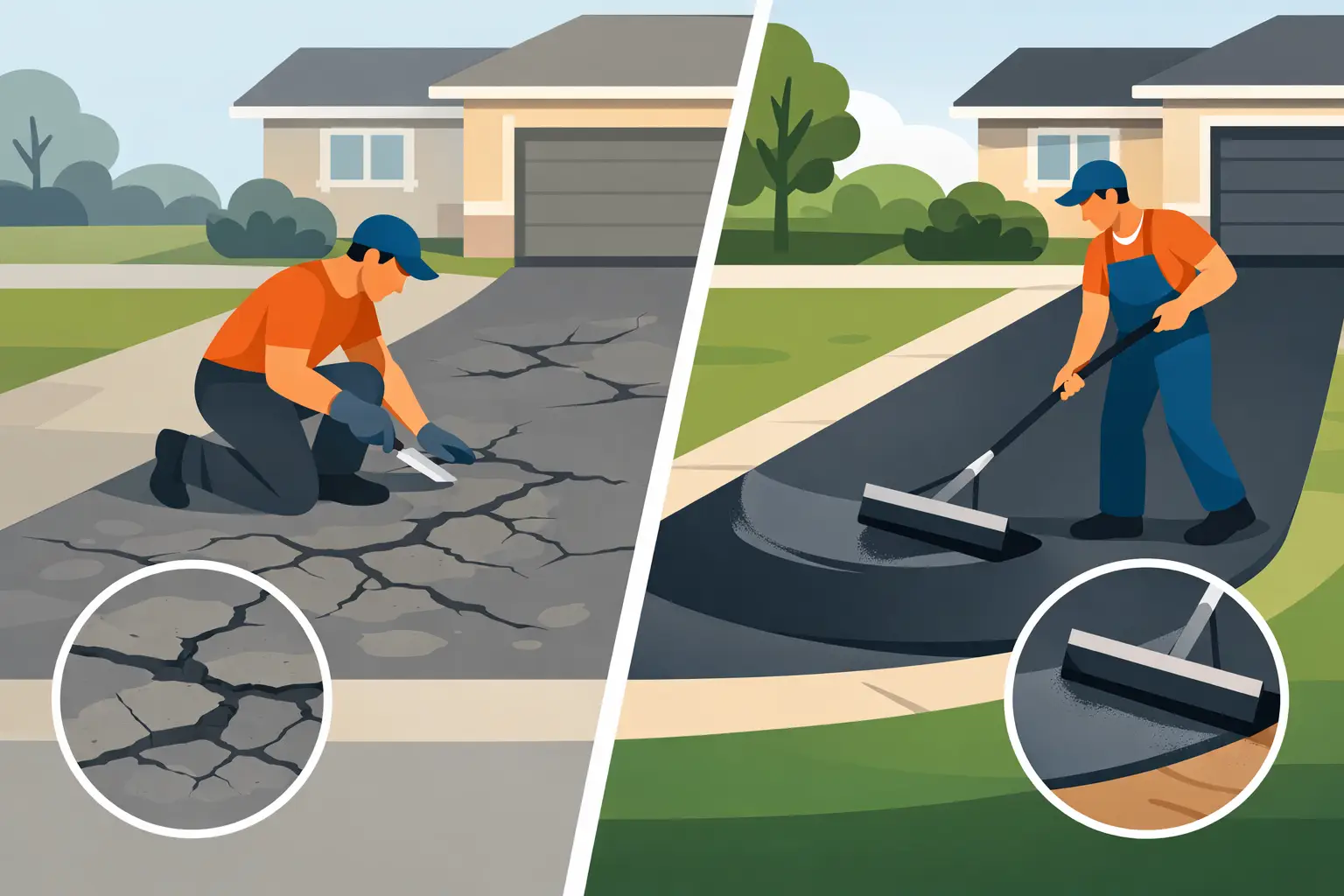
A driveway can look beyond saving long before it has actually reached the end of its useful life. Faded tarmac, loose gravel, surface cracks and patches of standing water are common across Dublin and Wicklow, particularly where a driveway has been exposed to years of traffic and wet weather. So, can you resurface old driveways rather than remove and replace them completely? Often, yes – but only when the foundation beneath the existing surface is still stable.
Resurfacing can give a tired entrance a clean, durable finish without the disruption and cost of a full rebuild. However, applying a new surface over a failing base simply hides the problem for a short time. The right decision starts with an honest assessment of the driveway’s condition, drainage and intended use.
Can You Resurface Old Driveways Successfully?
An old driveway can usually be resurfaced when it is structurally sound, reasonably level and free from major movement. Minor cracks, worn areas and a dull appearance do not necessarily mean the whole driveway needs to be excavated. A professional contractor can repair local defects, prepare the existing base and install a suitable new finish.
The key question is not whether the top layer looks old. It is whether the layers below it can still support vehicles and manage water properly. A driveway that has sunk near drains, developed deep potholes or cracked in several directions may have a failed sub-base. In that case, resurfacing alone is unlikely to last.
At Resin Bound Dublin, every project begins by checking the condition of the existing surface, the edges, falls and drainage. This allows the work to be specified correctly from the outset, rather than offering a quick overlay that may create problems later.
Signs your driveway is a good candidate for resurfacing
A resurfacing project is often practical where the driveway has light surface cracking, worn tarmac, discolouration, isolated shallow dips or an outdated finish. The base should feel firm under vehicle weight, with no widespread sinking or soft spots. Existing levels also matter. There needs to be enough room to add the new surface without creating a step at the front door, garage threshold or pavement edge.
A sound existing tarmac base can be particularly useful. Once repaired and cleaned, it may provide a suitable foundation for a fresh tarmacadam layer or, in the right circumstances, a resin bound finish. Concrete can also sometimes be resurfaced, but it needs careful preparation and assessment because movement in the slabs or cracks may transfer through a new layer.
When replacement is the better investment
Full excavation is usually the wiser route when there is extensive cracking, substantial rutting, repeated potholes or clear signs that water is getting beneath the surface. A driveway that has been laid directly onto poor ground may move with changing weather and traffic, no matter how attractive the new top layer is.
Drainage failures are another reason not to take shortcuts. If rainwater regularly pools against the house, flows towards a garage or runs onto the public footpath, the falls and drainage arrangement need to be corrected. A full rebuild makes it possible to install the right sub-base, drainage channels and permeable construction where required.
This can cost more initially, but it prevents the frustration of paying twice. A well-built driveway is a long-term part of the property, not a cosmetic patch.
Choosing the Right Surface for an Old Driveway
The best resurfacing material depends on the base, the level of vehicle use, the property style and how water needs to drain. There is no single finish that suits every driveway.
Resin bound surfacing
Resin bound driveways combine natural aggregate with a clear resin binder to create a smooth, decorative finish. When installed over a suitable prepared base, the surface is permeable, allowing water to pass through the system rather than sit on top. This can support SUDS-compliant drainage solutions and is particularly valuable on properties where managing rainfall is a concern.
Resin bound is available in a wide choice of aggregate colours, making it easier to complement brickwork, stone, render or garden features. It is also a practical option for pathways and patios where homeowners want a coordinated finish. The surface needs proper edge restraint and a stable base, though. It should not be installed over cracked or moving ground without resolving those issues first.
Tarmacadam
Tarmacadam remains a dependable choice for busy driveways. It offers a neat, hard-wearing finish and can be especially suitable where cars, vans or frequent turning movements place more stress on the surface. An existing tarmac driveway can often be overlaid after repairs, provided its foundation remains solid and the finished level will not cause access issues.
Tarmac is less decorative than resin bound, but it can be paired with block or granite edging for a more defined entrance. It is also useful where a practical, low-maintenance surface is the main priority.
Gravel and other options
A gravel driveway can refresh the appearance of an older entrance at a lower initial cost, and it suits rural or traditional properties well. It needs effective edging and a stable base to prevent the stone spreading into paths and planting beds. Regular raking and occasional topping up should also be expected.
For patios and paths beside the driveway, resin bound or paving may be more comfortable underfoot and easier for pushchairs, wheelchairs and wheeled bins. The right choice should reflect how the area is used every day, not only how it looks on completion.
What a Proper Resurfacing Project Involves
A lasting resurfacing job is mostly about preparation. The visible surface may be installed quickly, but the quality of the groundwork determines how well it performs over time.
First, the existing driveway is inspected and measured. This includes checking for weak areas, levels at the house and road, drainage routes, access requirements and any services beneath the surface. The contractor can then advise whether local repairs, an overlay or full excavation is appropriate.
If resurfacing is suitable, loose material and failed sections are removed. Cracks, potholes and depressions are repaired, while the surface is cleaned and prepared to receive the new layer. Edges may need to be strengthened or replaced so the new finish has a firm boundary.
The final surface is then laid to the correct thickness and falls. With resin bound systems, the aggregate and resin must be mixed accurately and laid in suitable weather conditions. With tarmacadam, correct compaction is essential to create an even surface capable of handling regular vehicle use. The work should finish with clean transitions at gates, paths, drains and thresholds.
Drainage Should Shape the Decision
Many older driveways were designed with little thought for rainfall beyond a basic slope towards the road. That approach can create puddles, moss growth and water runoff problems, particularly during heavier showers. Resurfacing is an opportunity to improve this rather than repeat it.
A permeable resin bound system, built over an appropriate permeable base, can allow water to drain through the driveway. Depending on the site, this may reduce the need for additional drainage measures. Other properties may need channel drains, soakaways or carefully adjusted falls to direct water safely away from buildings.
Drainage requirements vary by site. Soil conditions, driveway size, local ground levels and the position of the property all affect the right solution. A site survey is the best way to avoid assumptions.
Common Mistakes to Avoid When Resurfacing
The most common mistake is choosing an overlay solely because it appears cheaper. If the old driveway is moving or holding water, a new finish cannot correct the underlying defect. It may look excellent at first, then crack or dip as the base continues to fail.
Another issue is raising levels too high. Even a relatively thin new surface can interfere with door thresholds, damp-proof courses, garage access and drainage. This is why finished levels should be planned before any material is ordered.
Finally, avoid treating edging as an afterthought. Strong, tidy edges protect the surface and make the driveway look properly finished. They are especially important for resin and gravel installations, where containment affects both appearance and performance.
Is Resurfacing Worth It?
For a driveway with a sound base, resurfacing is often a very worthwhile investment. It can improve kerb appeal, make cleaning easier, address minor wear and create a more consistent entrance to the home. It is generally less disruptive than full reconstruction because much of the existing structure may remain in place.
Where the foundation has failed, replacement is the better value. The project takes more groundwork, but it gives the installer control over sub-base depth, compaction, drainage and finished levels. That is the route to choose when reliability matters more than a short-term saving.
The best old driveways are not simply covered over. They are assessed properly, repaired where needed and finished with a surface that suits the property, the ground conditions and the way the household uses the space. A clear survey and an itemised proposal will give you the confidence to choose the right level of work before the first machine arrives.
Leave a Reply