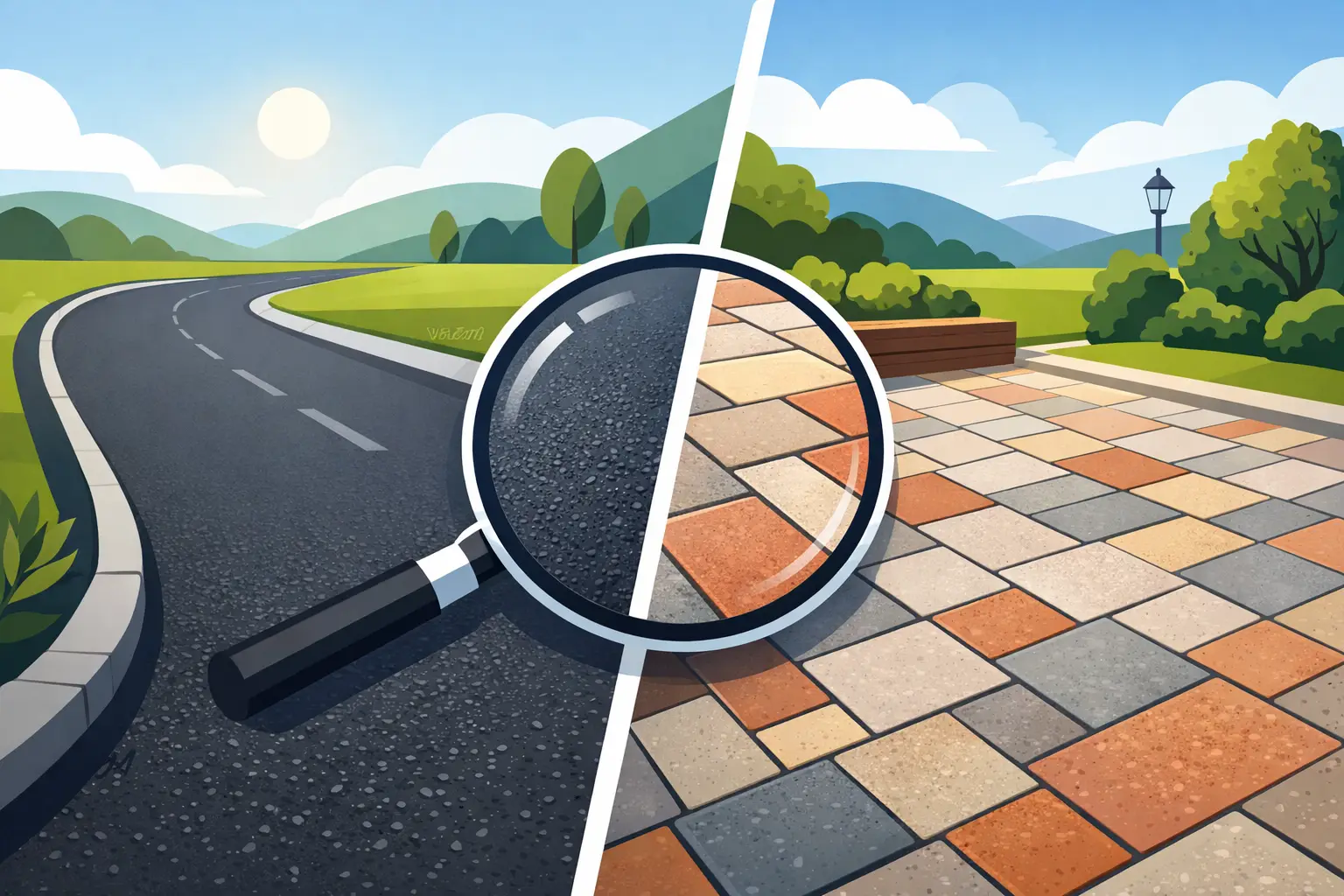
A driveway can look perfectly acceptable on the day it is laid, then become a source of frustration after the first wet winter, a few oil marks or a drain that struggles to cope. When weighing up tarmac versus block paving, Dublin and Wicklow homeowners are usually deciding between a clean, practical surface and a more detailed, decorative finish. Both can be excellent choices when the groundwork is right. The better option depends on how you use the space, the condition of the existing driveway and the result you want for your home.
Tarmac versus block paving at a glance
Tarmacadam creates a smooth, continuous surface. It is well suited to driveways with regular vehicle use, larger areas and properties where a tidy, understated appearance is preferred. It is also a familiar choice for access roads, commercial yards and parking areas because it is hard-wearing and efficient to install over a properly prepared base.
Block paving is made up of individual concrete or clay blocks laid in a chosen pattern. It offers more design freedom, with options for colour, edging, borders and laying styles. For homeowners focused on kerb appeal, it can complement traditional brickwork, period homes and landscaped front gardens particularly well.
Neither material is automatically better. A well-installed tarmac driveway will outperform poorly laid block paving, and the reverse is equally true. Excavation depth, sub-base preparation, falls, edging and drainage matter as much as the surface itself.
Appearance and design flexibility
Block paving provides the wider range of visual options. Blocks can be selected in colours that work with the house exterior, while contrasting borders can define parking bays, paths or planting areas. Herringbone patterns are popular on driveways because they interlock effectively under vehicle movement. Stretcher bond and basketweave patterns offer a different character where the driveway has a lighter level of use.
This flexibility comes with a decision-making process. The finished result needs to suit the scale of the property and avoid looking overly busy. A large mix of colours, borders and patterns may not add value if it clashes with the home or surrounding streetscape. A carefully chosen, restrained design often delivers the best result.
Tarmac has a simpler appearance, usually in a deep black finish that softens to charcoal over time. It creates a neat backdrop for stone kerbs, granite edging, gravel details or planted borders. This can make it the stronger option where the front garden already has plenty of visual interest. It also suits contemporary properties that benefit from clean lines rather than decorative paving.
Cost: look beyond the initial quotation
Tarmac is commonly the more cost-effective choice per square metre, especially for broad driveways. There is less individual laying involved, and the material is designed to cover larger spaces efficiently. That does not mean every tarmac project will be inexpensive. Deep excavation, removal of old concrete, unstable ground, new drainage channels and substantial kerbing can all affect the overall cost.
Block paving generally costs more because each block must be laid, cut and compacted correctly. Intricate patterns, curved edges and decorative borders increase labour time. The quality and type of block also make a difference, with premium products carrying a higher price than basic concrete options.
The most useful quotation is itemised and explains the full build-up, not just the final surface. Homeowners should know how much existing material will be removed, the depth of the sub-base, whether edging is included and how water will be managed. A low price can become expensive if the driveway later develops movement, pooling water or failing edges.
Drainage and SUDS requirements
Drainage should be part of the first conversation, not an afterthought once the surface has been chosen. In Ireland, heavier rainfall can quickly expose poor falls or inadequate drainage. Water should not run towards the house, sit in low spots or discharge onto a public footpath or road.
Standard tarmac is not permeable, so the design may require drainage channels, gullies or another suitable method of managing surface water within the property. The driveway should be graded carefully from the outset. Tarmac can work very well where an effective drainage plan is included in the groundwork.
Traditional block paving is also often laid on a largely impermeable construction. However, permeable block paving is available and designed to allow water to pass through joints and into the prepared layers below. This can support Sustainable Drainage Systems, commonly known as SUDS, where site conditions allow.
The right solution depends on soil conditions, driveway levels, existing drainage and the amount of water collecting from roofs or adjoining surfaces. A site assessment is the sensible starting point. It identifies whether permeable paving, channel drainage, a soakaway or a combination of measures is appropriate.
Durability under everyday use
A properly constructed tarmac driveway is durable, resilient and comfortable to drive on. Its continuous finish has no joints for weeds to grow through, and it copes well with regular cars and family vehicles. It is particularly practical for larger turning areas and sloped driveways, where a smooth surface can be easier to maintain.
Tarmac can be damaged by sharp stands, heavy point loads and turning wheels in the same place during very warm weather. Fuel and oil spills should be dealt with promptly, as they can soften or mark the surface. Small cracks should not be ignored, since water entering the base layers can cause more extensive deterioration in time.
Block paving is strong when laid on a correctly compacted foundation with secure edge restraints. Individual blocks distribute loads effectively, and a damaged or stained block can often be lifted and replaced without redoing the entire driveway. That repairability is one of its main long-term advantages.
Its weak point is usually the installation beneath the blocks rather than the blocks themselves. If the sub-base is too shallow or poorly compacted, ruts and low areas can appear. Edges may spread if they are not properly restrained. Choosing an experienced contractor with the right machinery and groundwork knowledge is essential for either material.
Maintenance requirements
Tarmac is generally lower maintenance day to day. Regular sweeping and occasional cleaning keep it looking tidy. A professional surface treatment may be considered after a number of years to refresh the colour and help protect the finish, depending on its condition and usage. Keep drainage channels clear so water does not sit at the driveway entrance or against the property.
Block paving needs more attention between the joints. Windblown seeds, moss and weeds can establish over time, particularly in shaded or damp locations. Routine sweeping, careful weed control and periodic jointing sand replacement will help preserve the interlock and appearance. Pressure washing can improve the finish, but excessive pressure or poor technique can remove jointing material and create more maintenance work.
For homeowners who want the least amount of ongoing upkeep, tarmac often has the edge. For those prepared to carry out occasional maintenance in return for a more decorative surface, block paving remains a strong option.
How the site can change the decision
The shape and condition of the driveway influence the best material. A long, wide entrance with multiple cars may favour tarmac for its efficient coverage and uncluttered finish. A smaller front garden where the driveway forms a major part of the property’s appearance may benefit from block paving, particularly if pathways and entrance steps can be coordinated.
Existing levels are equally significant. Raising a new driveway too high can cause problems at door thresholds, air bricks, gates and neighbouring boundaries. In some cases, the old surface needs to be excavated fully rather than laid over. This creates enough depth for a stable sub-base and the selected drainage system.
It is also worth considering access. Tarmac installation relies on material arriving hot and being laid and compacted promptly. Restricted access may affect how the project is planned. Block paving can be more adaptable on tight sites, although it remains labour-intensive and still requires suitable excavation and compaction equipment.
When tarmac is usually the better choice
Choose tarmac when you need a hard-wearing driveway with a clean, simple appearance and relatively low maintenance. It is often the sensible answer for large areas, busy homes, rental properties and practical parking spaces. It can also be an attractive option where natural stone edging, gravel borders or planting will provide the visual detail.
Choose block paving when design is central to the project and you want colour, pattern and borders to play a visible role. It is particularly effective for feature entrances, paths and driveways that need to match existing brickwork or patio paving. It also offers the useful benefit of localised repairs if a section becomes damaged.
Get the groundwork right before choosing a finish
The decision between tarmac and block paving should not be made from a sample board alone. A reliable contractor will assess the ground, establish the correct levels, plan drainage and specify the construction layers before recommending a surface. At Resin Bound Dublin, this full-project approach is central to delivering driveways that look right and perform properly through changing weather.
A good driveway should make arriving home easier, not add another maintenance problem to the list. Start with how the area needs to work in wet weather, under daily traffic and alongside the character of the property. The surface that answers those practical questions well is the one you will still be pleased with years from now.
Leave a Reply