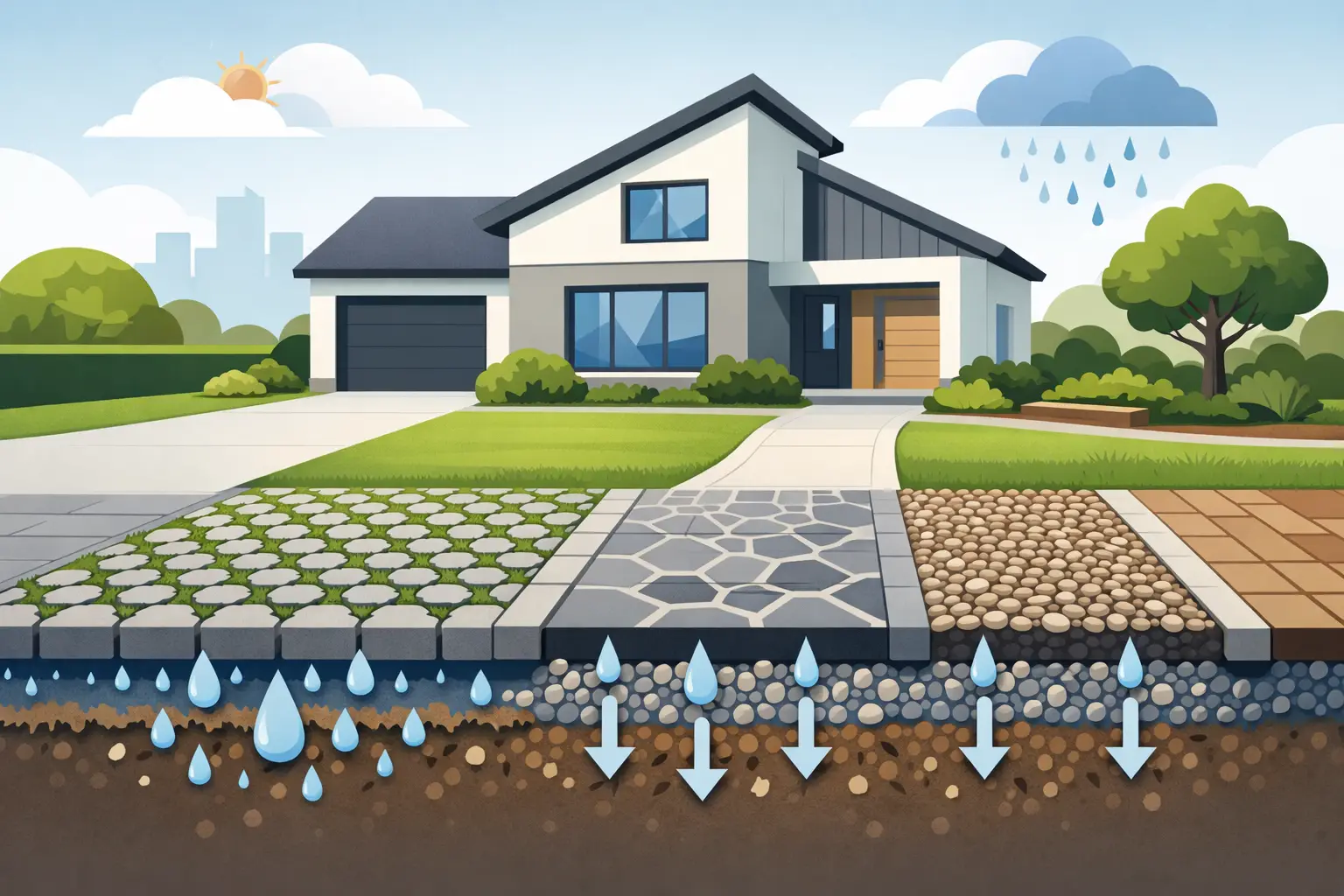
A heavy shower can quickly show whether a driveway has been designed properly. Water pooling at the gate, running towards the house or washing gravel onto the pavement is more than an inconvenience – it can point to a drainage problem that will worsen over time. The top permeable paving benefits are therefore not just about appearance. For homeowners in Dublin and Wicklow, they centre on managing rainfall where it lands while creating a smart, durable surface for everyday use.
Permeable paving allows water to pass through the finished surface and into a properly prepared sub-base below. Resin bound aggregate is a popular example, but permeable block paving, porous asphalt and carefully constructed gravel systems can also be suitable. The right choice depends on the site, expected traffic, ground conditions and the finish you want to achieve.
Top permeable paving benefits for your property
Better drainage during Irish weather
Dublin and Wicklow receive regular rainfall throughout the year, often in short, intense bursts. A conventional sealed driveway sends that water towards gullies, drains and low points. If the drainage system is undersized, blocked or already under pressure, standing water can follow.
A permeable surface changes the route water takes. Rain passes through the paving and is held temporarily within the stone sub-base, where it can gradually soak into the ground or be directed through a designed drainage arrangement. This reduces surface run-off and helps keep the driveway usable after rain.
That benefit is especially valuable on properties where water currently gathers near the entrance, garage or front door. It is not a substitute for correct site assessment, however. Sloping driveways, clay-heavy ground, high water tables and areas close to buildings may need additional drainage measures. A professional installation should account for these conditions before any surfacing is laid.
Support for SUDS-compliant driveway design
SUDS, or Sustainable Drainage Systems, are designed to manage rainwater close to where it falls rather than moving it immediately into public drainage. Permeable paving can form an important part of a SUDS-led driveway design because it slows down and controls run-off.
For homeowners, this can make a new driveway a more practical choice where drainage and planning considerations are relevant. It can also reduce the need for visible channel drains across the entrance in some layouts, although channels may still be necessary in particular locations.
Compliance is not achieved simply by choosing a material described as permeable. The construction underneath matters just as much. A permeable surface needs an open-graded aggregate base, suitable edge restraints, correct levels and a drainage strategy appropriate to the site. A resin bound finish laid over an impermeable base, for example, cannot deliver the same drainage performance as a fully permeable system.
Less standing water and reduced slip risk
Puddles are hard on driveways. They collect dirt, encourage algae and moss growth, and can become slippery when temperatures fall. By allowing water to drain through the surface, permeable paving helps the area dry more evenly after wet weather.
This is particularly useful for paths, patios and entrances used by children, visitors or anyone with reduced mobility. A well-specified resin bound surface also provides a smooth, even finish without loose stones moving underfoot. For commercial properties, schools and shared residential areas, that combination of drainage and stable footing can be an important practical advantage.
No outdoor surface is completely maintenance-free or risk-free. Shaded areas will still benefit from periodic cleaning, particularly where leaves, soil and organic matter build up. Keeping the surface clear helps preserve both its appearance and its ability to drain.
A cleaner, more polished kerb appeal
A driveway takes up a large part of the front of many homes, so its condition has a noticeable effect on kerb appeal. Permeable surfacing does not have to look utilitarian. Resin bound aggregate is available in a wide selection of natural stone blends, allowing homeowners to choose colours that complement brickwork, render, fencing or existing paving.
Unlike loose gravel, the aggregate is bound in place with resin. This means there are no stones regularly migrating onto the footpath, into the road or across the lawn. The finished surface looks neat, feels comfortable underfoot and can be shaped around curves, planting beds and pathways.
The visual result depends on preparation as much as the chosen colour. Clean edges, consistent levels and properly formed transitions at gates, thresholds and garage entrances give the driveway a finished appearance that lasts. A good contractor will discuss these details at the quotation stage rather than treating them as an afterthought.
Long-term durability with the right groundwork
The surface is only the top layer of a driveway. The durability people expect from permeable paving comes from excavation, ground preparation and the correct depth of sub-base for the vehicles using it. A family driveway carrying cars needs a different construction from a path, while commercial access routes may require a more substantial design again.
When the base is properly compacted and the drainage layers are correctly installed, a permeable driveway can cope well with regular use while avoiding the cracking and water-related damage often associated with poor construction. Resin bound paving is also resistant to weed growth from below when installed on a suitable prepared base, although wind-blown seeds can still settle on the surface over time.
There is a trade-off to consider. Permeable systems require careful installation and quality materials, so the initial cost may be higher than a basic sealed surface. In return, homeowners gain a driveway designed around drainage, appearance and longevity rather than a quick cover-up over an existing problem.
Lower maintenance than loose alternatives
Every exterior surface needs some attention, but a permeable resin bound driveway is straightforward to look after. Regular sweeping removes leaves and debris before they block the pores. A gentle wash from time to time helps lift surface dirt, and isolated weeds can be removed before they take hold.
Avoid covering large areas with impermeable mats, storing soil directly on the driveway or allowing fine material to build up in the surface texture. These can reduce water flow. If drainage seems slower than expected, professional cleaning may restore performance without replacing the whole surface.
Gravel can also be permeable and cost-effective, but it needs more routine raking and topping up. It may not suit homes where a smooth route for prams, wheelchairs, bicycles or wheeled bins is a priority. Permeable block paving offers another durable option, though joints need to be kept free from compacted dirt and weeds. The best material is the one that suits how the space will actually be used.
Why installation quality matters as much as material
A permeable driveway should begin with a site visit, not a colour chart. Levels must be checked so water does not flow towards the property. Existing concrete, tarmac or unstable ground may need to be excavated. The installer should then establish suitable falls, install the correct stone layers and compact them properly before applying the final surface.
This full-project approach is where experienced local contractors add real value. At Resin Bound Dublin, driveway projects are managed from consultation and groundwork through to drainage and final surfacing, helping ensure the finished result performs as intended rather than simply looking good on day one.
Ask for an itemised quotation that explains excavation, sub-base preparation, drainage work, edging and the chosen surface. It is also sensible to ask whether the proposed build-up is permeable throughout and whether any site-specific drainage limitations have been identified. Clear answers at this stage prevent costly changes later.
Choosing a permeable surface for your home
For a front driveway, resin bound aggregate is often chosen where homeowners want a premium, smooth and low-maintenance finish with dependable permeability. Gravel may suit a more traditional property or a larger area where budget is a central consideration. Permeable paving blocks can work well where a structured, classic look is preferred.
The decision should also reflect sunlight, slope, vehicle weight, existing drainage and how long you expect to stay in the property. A surface that costs less initially may need more upkeep, while a higher-quality system can improve daily usability and presentation for years.
A well-designed permeable driveway quietly does its job every time it rains. When the groundworks, drainage and final finish are planned together, you gain a cleaner entrance, fewer water worries and a surface that adds lasting value to the home.
Leave a Reply