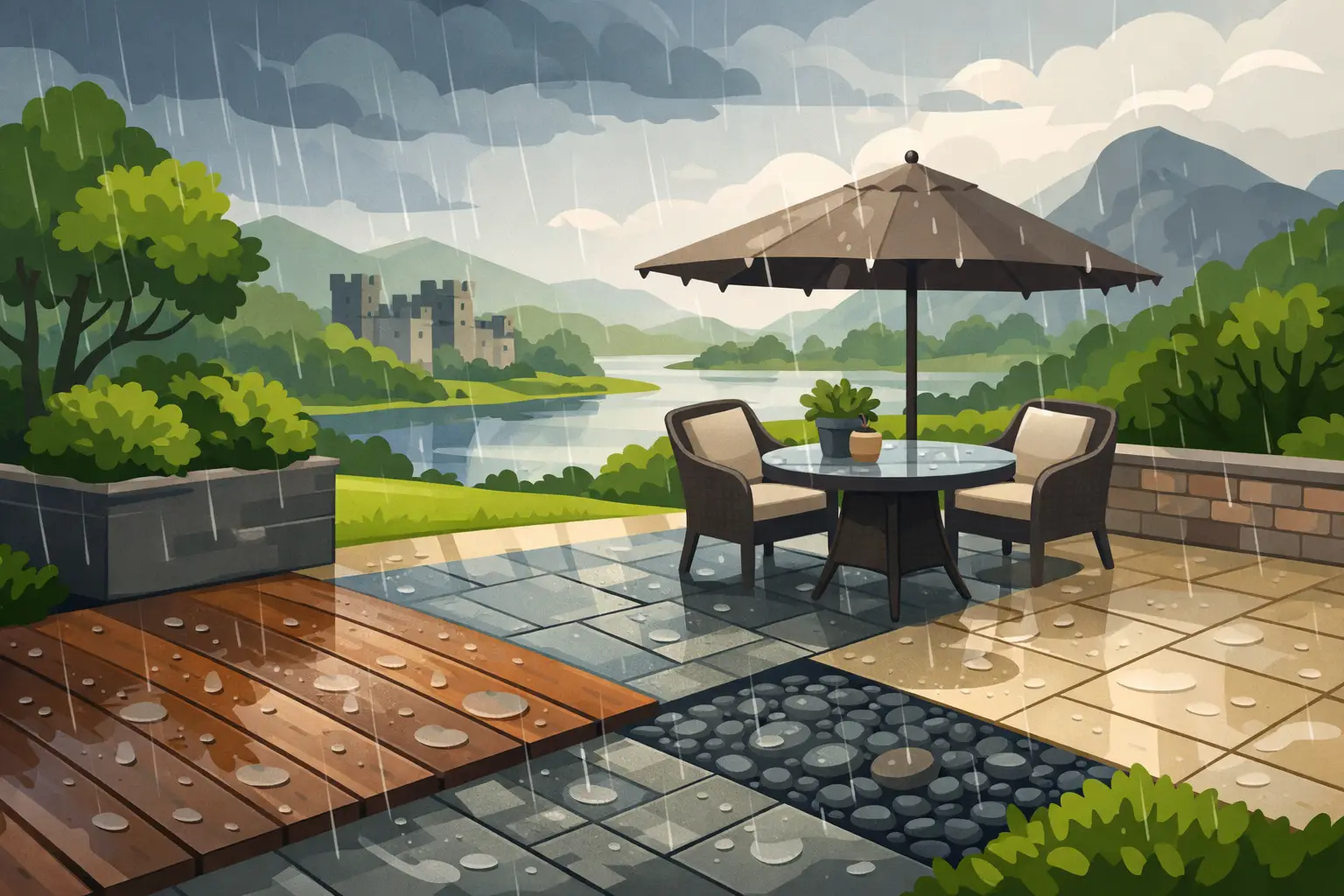
A patio can look excellent when it is newly laid, then become frustrating after the first wet autumn if water sits on the surface, algae takes hold or the paving turns slippery. For Dublin and Wicklow homes, the best patio materials for rain are not simply the ones that resist water. They must also provide reliable grip, direct rainfall away from the property and suit the ground conditions beneath.
The material matters, but installation matters just as much. A quality patio needs a properly prepared base, suitable falls and, where required, drainage or a permeable construction. Get those details right and a patio remains practical through heavy showers as well as looking smart in dry weather.
What a rain-ready patio needs
Ireland’s frequent rainfall puts every part of an outdoor surface to work. Water needs somewhere to go quickly. If it pools against walls, doors or garden structures, it can cause staining, frost damage and damp-related concerns. If it lingers on the patio itself, it encourages moss and algae, increasing the risk of slips.
A suitable patio surface should balance four things: drainage performance, slip resistance, long-term durability and maintenance. The right balance depends on how the area will be used. A small sheltered seating area has different requirements from a large family patio, a route to a side gate or an exposed garden that receives runoff from a sloping lawn.
Surface texture also deserves attention. Very smooth paving can be attractive, but it may need more regular cleaning in shaded, damp locations. A slightly textured finish is often the more sensible choice for steps, paths and busy patio areas.
Best patio materials for rain: the leading options
Resin bound stone
Resin bound surfacing is one of the strongest choices where drainage is a priority. It combines natural aggregate with a specialist UV-stable resin and is laid as a smooth, hard-wearing, permeable surface over a suitable porous base. Rainwater passes through the surface rather than collecting on top, helping to reduce standing water.
For patios, resin bound stone offers a neat, contemporary finish without loose stones underfoot. It is comfortable for garden furniture, prams and wheeled bins, while the aggregate texture provides useful grip. With a wide choice of aggregate blends, it can be selected to complement brickwork, fencing and existing driveway surfaces.
Its performance relies on correct groundwork. A permeable surface will not solve an issue if the sub-base is poorly constructed or water has no route into the ground. On sites with poor soil drainage, a contractor may need to design a suitable drainage build-up or connect the system appropriately. Professional preparation is what allows a resin bound patio to deliver the clean, free-draining result homeowners expect.
Porcelain paving
Outdoor porcelain is popular for its crisp appearance, colour consistency and low porosity. Quality exterior porcelain absorbs very little water, so it is less prone to staining and frost-related cracking than many natural stone products. It is also straightforward to clean, making it a practical option around dining areas and patio doors.
However, porcelain itself is not permeable. The patio must be laid to a controlled fall so that surface water runs towards a drainage channel, garden border or another suitable outlet. Choose tiles specified for outdoor use with a slip-resistant finish, rather than polished or indoor-grade porcelain. In exposed gardens, this distinction is particularly important.
Porcelain can be an excellent choice when homeowners want a modern, uniform look and are happy to include drainage within the design. It requires precise cutting, stable bedding and well-finished joints, so it is not a surface where shortcuts pay off.
Natural stone paving
Natural stone brings character that manufactured materials cannot exactly copy. Sandstone, granite and limestone all have distinct colours and textures, and the variation from slab to slab can make a garden feel established and individual.
For wetter settings, textured granite and good-quality riven sandstone are generally stronger practical choices than highly smooth or heavily porous stones. Granite is exceptionally durable and typically offers good grip when given an appropriate finish. Sandstone can work very well but benefits from sealing and routine cleaning, particularly where trees create shade and leaf debris.
Natural stone needs sensible detailing. Joints should be properly filled, slabs should be securely bedded and the finished patio needs a fall away from the house. Some stone can darken when wet or develop natural weathering over time. Many homeowners like this lived-in appearance, but it is worth discussing before choosing a blend.
Concrete paving slabs
Modern concrete paving is available in a far broader range of sizes, textures and colours than older-style plain flags. It is often a cost-effective way to create a durable patio with a traditional or contemporary appearance. Textured concrete slabs can offer dependable grip and stand up well to regular foot traffic.
Like porcelain and most natural stone, conventional concrete paving is largely impermeable once laid. Water management therefore comes from the patio’s falls, drainage channels and the surrounding landscape design. A correctly laid slab patio should not hold water at joints or low points.
Concrete is a sensible option for homeowners who want a structured paved finish at a controlled budget. The trade-off is that some products may fade or show weathering more noticeably over the years. Choosing a reputable paving range and installing it on a well-prepared foundation makes a significant difference.
Gravel patios
Gravel is naturally free-draining and can suit informal garden areas, cottage-style properties and secondary seating spaces. It is relatively quick to install and gives rainwater an easy route into the ground when paired with a permeable base.
The drawback is movement. Loose gravel can travel into lawns, collect in footwear and make chairs less stable. It may not be ideal for households with young children, mobility needs or frequent use of wheeled furniture. Gravel grids can improve stability, but a resin bound finish may be the better long-term answer where homeowners want the look of aggregate without loose stones.
Drainage is part of the patio, not an add-on
A patio should normally fall away from the house, often at a gentle gradient that moves water without making the surface feel uneven. The exact fall depends on the material, the layout and the available drainage point. On a larger patio, a linear channel drain can collect water neatly near doors or along retaining walls.
Permeable patios are often an effective way to manage rainfall at source, but they still need suitable layers below the finished surface. Excavation depth, sub-base stone, geotextile membranes and edging all influence how the patio performs. Existing ground levels also need careful attention so that the new surface does not bridge damp-proof courses or direct water towards the property.
This is why a site visit is valuable before selecting materials. A contractor can assess access, levels, soil conditions, runoff from roofs and nearby surfaces, then recommend a construction method rather than simply pricing square metres of paving.
Choosing the right option for your garden
For homeowners who want a permeable, low-maintenance surface with a smooth finish, resin bound stone is often the best all-round option. For a sharp, contemporary patio with controlled drainage, exterior-grade anti-slip porcelain is a strong contender. Natural stone suits gardens where texture and character are central to the design, while concrete paving provides practical value. Gravel works best where an informal, free-draining look outweighs the need for a firm walking surface.
Also consider shade. A north-facing patio beneath mature trees will need more regular cleaning than an open, sunny space regardless of material. Keeping leaves clear, brushing away soil build-up and treating early signs of algae will protect grip and appearance.
At Resin Bound Dublin, patio projects are approached as complete surfacing works, from excavation and groundwork through to drainage and final installation. That approach helps ensure the finish looks right on day one and continues to deal with Irish weather properly for years to come.
A well-chosen patio should make the garden easier to enjoy after rain, not leave you waiting for puddles to disappear. Start with how water moves through your site, then choose the surface that fits both the garden and the way your household uses it.
Leave a Reply